For NYK FansOur Challenges

When you choose the dark mode display, you can reduce the power consumption and CO2 emissions generated by the website's screen display.
Released : May 26, 2026
Updated : May 26, 2026


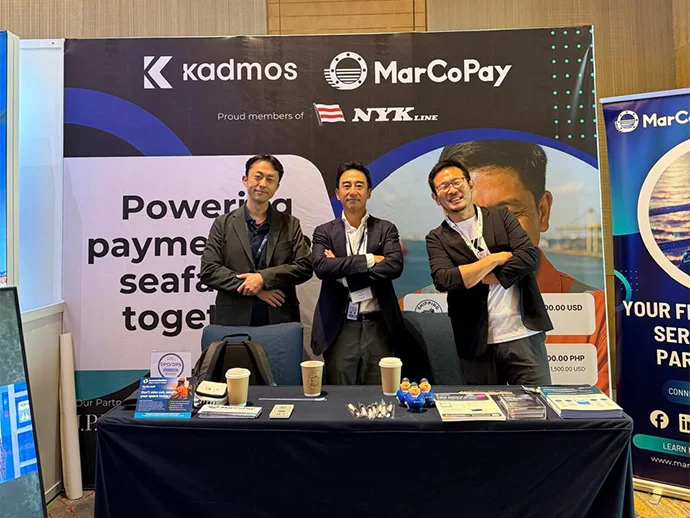
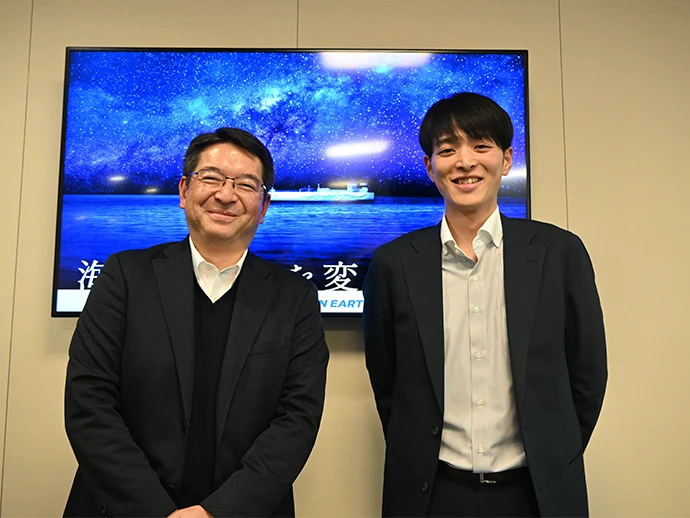
From left: Hayato Kiyohara, Toshiaki Fujioka who led MarCoPay since its founding, and Yutaka Kobayashi
An NYK Group is leveraging financial services to improve the lives of seafarers working across the world’s oceans. This company is MarCoPay Inc., which NYK set up in 2019 with its local partner, the Transnational Diversified Group (TDG), in Manila, the Philippines. The Philippines is home to the world’s largest seafarer population. A major trading house, Marubeni Corporation, and a major financial institution, MUFG Bank, Ltd., sympathized with this vision and, as a result, have jointly developed new services that support the seafarer community, leveraging their expertise. In 2025, NYK took the next step by acquiring Kadmos Holding GmbH in Germany, which provides significant payment services to seafarers of various nationalities. This collaboration has spurred a vision to build a “single window” that supports seafarers, shipowners, and crew-management and ship-management companies by linking two electronic money Issures (EMIs).
MarCoPay started full-scale business in 2021. The company built a platform for salary payment by using e-money (MarCoPay), setting a goal to improve the welfare of Filipino seafarers and their families. MarCoPay is the only digital salary payment platform provider for Filipino seafarers to have obtained an e-money issuer license from the Bangko Sentral ng Pilipinas, the central bank of the Philippines. Hayato Kiyohara, who has been seconded from NYK to MarCoPay, says, “The number of customers has steadily increased. There are now 60 or more businesses, including crewing companies, using MarCoPay.” Although the NYK Group uses MarCoPay, more than 90% of customers are companies not affiliated with the Group, including seafarers employed by them. Offering advantages in Philippine peso-denominated transactions, MarCoPay is becoming widely known in the Philippines as a service tailored to Filipinos.
MarCoPay has two main business objectives.
The first is to streamline the previously cumbersome salary remittance process for crew-management companies by using e-money, while also improving convenience for seafarers. Seafarers’ salaries, which are usually paid partly in cash on board, are now provided via e-money. As a result, seafarers can remit money from their smartphone app or other tools to their families, exchange their salary received in dollars for their local currency (peso) or another type of e-money, and withdraw e-money as cash at a bank or non bank financial institution. This also relieves captains and crew-management companies of the burden of managing large amounts of cash.
The other objective is to build a maritime-industry community centered on seafarers. Although the salaries of ocean-going seafarers are high in the Philippines, their economic value is often underappreciated due to their fixed-term contracts. Some seafarers suffer inconvenience, for example, when applying for a loan. Against this background, MarCoPay has visualized the intrinsic value of seafarers and leveraged the community's scale to provide services such as loans and insurance at advantageous terms, as well as travel packages and favorable services for car buyers in collaboration with airlines or automakers.
In 2025, the NYK Group’s e-money business entered a new phase. In July, the Group acquired Kadmos in Germany, which globally offers a salary payment platform for seafarers. The service’s target market thus expanded from Filipino seafarers to seafarers worldwide.
The MarCoPay service is based on its Philippine e-money license and is therefore tailored to Filipinos. This is both a strength and a challenge. NYK estimates that there are roughly 2 million seafarers worldwide. Although about 300,000 to 400,000 of them are Filipinos, the main target zone that MarCoPay can directly cover includes shipowners and crew- and ship-management companies that have a high ratio of Filipino seafarers on board. The number of seafarers who work for them is only around 100,000. MarCoPay wondered how they could deliver the service to all Filipino seafarers and build services for non-Filipino seafarers as well in order to enter a larger market. The strategic solution was the acquisition of Kadmos.
By combining the services of the two companies, MarCoPay can now reach customers with a low ratio of Filipino seafarers, as well as those who employ seafarers from a wide range of nationalities, such as Indians. This is the exact complementary relationship between MarCoPay and Kadmos that was sought.
The customer base will also expand. MarCoPay already has advantages due to its existing activities in Asia, mainly with Japanese shipowners and ship-management companies. Still, its acquisition of Kadmos enables the company to attempt service expansion to companies in maritime industry clusters in Europe, such as Greece, Germany, and northern Europe.
In October 2025, Kadmos secured a U.K. e-money license. Previously, the company had provided financial services through partner companies, but it faced restrictions on service offerings, long money transfer times, and high remittance fees. The company is expected to solve these problems by developing services under its own license.
“We want to build a framework for customers to receive services from Kadmos and MarCoPay through a single point of contact,” says Yutaka Kobayashi, who is seconded from NYK to KDMS Payments Ltd. (part of the Kadmos Holding GmbH group) in the U.K., which acquired the license. “We plan to start providing services based on Kadmos’s U.K. license for external customers around September 2026, after conducting tests with a ship-management company in the NYK Group.”
The company envisions a future system in which customers can select the service of either company according to nationality composition, using Kadmos, which covers seafarers from a wide range of nationalities, as the single point of contact for customer contracts. MarCoPay has confidently provided services to Filipino seafarers, but has found it difficult to use them on ships with multinational seafarers. The Kadmos services will enable the provision of appropriate remittance services for seafarers of all nationalities. This collaboration will create significant value,” says Kiyohara.
The initiatives of MarCoPay and Kadmos are also intended to promote the wellbeing of seafarers, who play a critical role in supporting the maritime industry. Now is the time when everybody uses cashless transactions, and the number of digital native seafarers is increasing. MarCoPay is endeavoring to deliver one-stop seamless services as soon as possible.


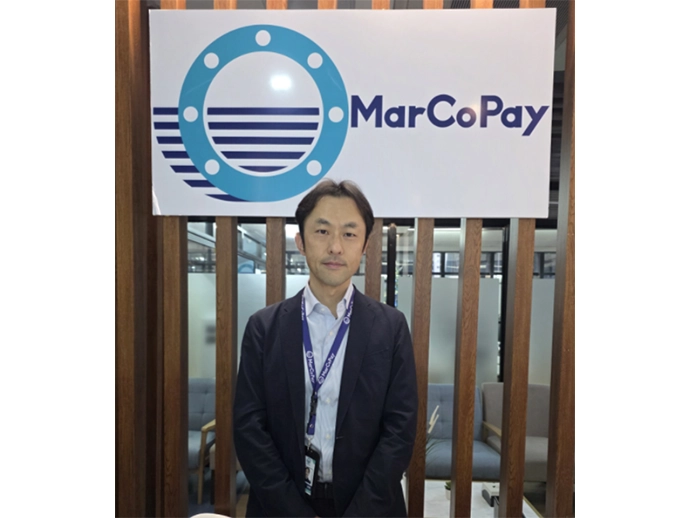
Mr. Kiyohara
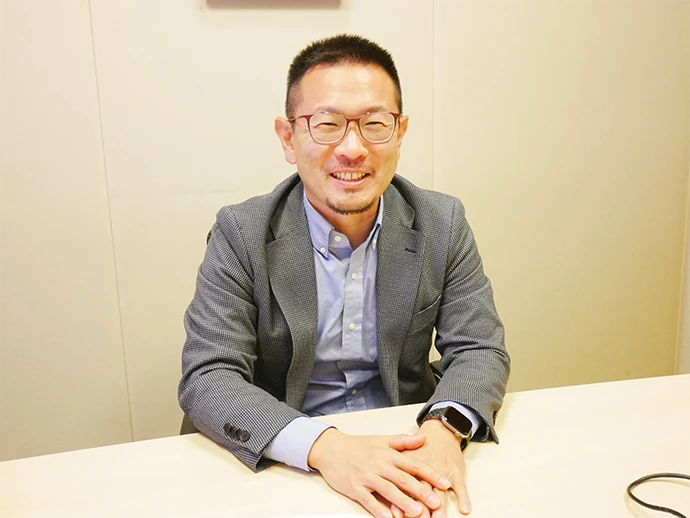
Mr. Kobayashi
–– What led you to join NYK, and what responsibilities have you held so far?
Kobayashi: I joined NYK in 2007. I wanted to work for a shipping company because I felt that maritime transportation is an industry that supports the world. After entering NYK, I worked for the Harbour Group, U.S. Car Carrier Group, and NYK Business Systems. Then, I got involved in the Ship Business Group’s acquisition of Kadmos. Since October 2025, I have been seconded to KDMS Payments, which acquired an e-money license in the U.K. I do not feel perplexed by my new role, as we experience frequent job rotations at NYK, and the shipping industry offers a wide range of work. The maritime transportation industry functions thanks to a variety of stakeholders, including not only customers across many industries but also shipyards, marine equipment manufacturers, seafarers, and ship-management companies that support navigation.
Kiyohara: After working for a bank from 2001, I entered NYK in 2004 through mid-career recruitment. I have spent half of my career at NYK, working on many project-planning roles in the dry-bulk field. I first worked in operations, chartering, and sales in the Forest Products Group, and later oversaw company-wide budget management and other roles in the Corporate Planning Group. After that, I attended a business school in the U.S. for two years to learn corporate strategy and business management. After returning to Japan, I was in charge of investment management for the LNG Group and fleet expansion for the Iron Ore & Coal Group and the Dry Bulk & Energy Business Co-ordination Group. My most recent project was to build a new ship that will succeed Lady Crystal, a restaurant cruise ship in Tokyo Bay operated by our Group. Since October 2025, I have worked for MarCoPay in Manila. I want to leverage my finance background, experience gained from interacting with shipowners and ship-management companies in the dry-bulk field, and insights from project planning and overseas study in my current work.
–– What drives your enthusiasm for being involved in the e-money business for seafarers?
Kobayashi: Although Kadmos’s services target the niche field of seafarers’ salaries, I can dive deep into the shipping industry. I also see a significant opportunity to gain finance experience while working for a ship operator. Although other companies also work on initiatives such as digital banks, many collaborate with financial institutions. It is rare for a company like ours to operate a financial business using its own e-money license. Although the current license does not cover deposits and financing, we have an eye to taking them on as the next step once the e-money business steadily matures. Since a huge amount of funding, such as charter, fuel, and other fees, is mobilized in the maritime transportation business, I envisage NYK being involved in the digital banking business in the future.
Kiyohara: As MarCoPay has established a business base, NYK’s e-money business is about to enter the next stage of development. I find this phase incredibly challenging and interesting, although we are also assuming great responsibility.
–– What is your message to those who want to become navigation officers and engineers?
Kobayashi: As you are expected to act according to manuals and rules onboard, you might feel that you cannot fully express your originality. However, the range of opportunities, both onboard and ashore, is sure to expand if you first properly learn the rules and accumulate experience. Indeed, we have entered fields we had never considered before, such as offshore wind power generation and e-money businesses, over the past decade or so. In these fields, we can take on challenges such as pushing the boundaries of the rules and participating in rule-making as well. I am sure that a background in rule-based onboard experience will be useful in problem-solving in an era without clear rules, such as decarbonization initiatives. As overseas ship-management companies often manage navigation officers and engineers, I sometimes wish I could join in the conversation about topics specific to sailors.
Kiyohara: One of the things I want to share is that the field in which seafarers, navigation officers, and engineers can thrive is expanding. For example, the manager of the e-money business team at NYK is a former in-house-trained seafarer. Navigation officers and engineers not only operate vessels but also engage in a wide range of activities, including new business development and corporate acquisitions.
Second, their activity arena has spread worldwide. For example, many people who have served as captain or chief engineer, even at other companies, work in the Philippines, a country that is an important source of seafarers.
Third, an environment has been established where you can receive various kinds of support. The business purpose of Kadmos and MarCoPay is to improve seafarers' quality of life and create an environment where they can focus on their work. And the number of shipowners, crew-management, and ship-management companies that use our services and understand their value is increasing. The maritime industry has high expectations for navigation officers and engineers, and as someone who works closely with them, I will give you as much support as possible.
Reedited from the KAIJI PRESS Special Issue published on March 31, 2026