For NYK FansOur Challenges


When you choose the dark mode display, you can reduce the power consumption and CO2 emissions generated by the website's screen display.
Released : Nov. 04, 2026
Updated : Nov. 04, 2026


NYK is advancing a range of initiatives to balance environmental responsibility with the long-term sustainability of international shipping. One key focus is how ships are recycled at the end of their operational lives.
Global attention to this issue has grown significantly, particularly following the June 2025 entry into force of the Hong Kong International Convention for the Safe and Environmentally Sound Recycling of Ships (Hong Kong Convention). Against this backdrop, how is NYK addressing sustainable ship recycling?
The service life of a large commercial vessel varies with economic conditions and market trends, but it is generally considered to be around 20 to 25 years. In most cases, vessels are recycled or dismantled once they reach the end of their service lives.
Ships contain significant amounts of recyclable materials. In fact, less than 10% of a vessel’s total weight is ultimately treated as waste. More than 90% is recycled in one form or another.
Hull steel plates are especially valuable. Made from high-quality steel designed to withstand harsh ocean conditions, they can be pressed and repurposed as construction steel or melted down and transformed into entirely new products.
In either case, recycling steel from retired vessels generates significantly fewer greenhouse gas (GHG) emissions than producing new steel through the mining and refining of iron ore.
The International Maritime Organization (IMO) has set a goal of net-zero GHG emissions from international shipping by or around 2050. However, achieving this goal will require more than improving the environmental performance of existing vessels alone. Demand for replacement vessels powered by more environmentally friendly alternative fuels is expected to grow, leading to an increase in ship recycling activity in the years ahead.
In this context, making effective use of recycled steel and promoting a circular economy will play an essential role in realizing a decarbonized society.
While ship recycling delivers significant environmental value, the industry still faces several challenges. Among the most important are issues related to human rights and environmental protection.
Today, more than 80% of the world’s ship recycling capacity is concentrated in South Asia, particularly in India, Bangladesh, and Pakistan. This concentration is largely driven by lower labor costs and strong domestic demand for steel.
Historically, many recycling yards in these developing countries have faced serious shortcomings in workplace safety and environmental management. Industrial accidents and marine pollution incidents such as oil spills were not uncommon. In response, the IMO adopted the Hong Kong Convention in 2009 to improve worker health and safety and reduce environmental pollution. Although ratification was slow, the convention finally entered into force in June 2025.
The convention establishes specific requirements for recycling facilities and ships. These include the development of safe and environmentally sound recycling yards, the preparation and maintenance of an Inventory of Hazardous Materials identifying the location and quantity of hazardous substances on board, the obligation to keep that inventory on board the vessel, and the requirement that ship recycling be conducted only at facilities compliant with convention standards.
The entry into force of the Hong Kong Convention has strengthened momentum across the shipping industry toward safer and more environmentally responsible ship recycling.
At NYK, however, efforts in this area began long before the convention took effect. Guided by the belief that shipowners should take responsibility for a vessel throughout its entire lifecycle — from cradle to grave — the company has implemented a range of initiatives over the years.
One of these is NYK’s approved yard system. The company established its own labor-condition and safety-management standards that exceed the requirements of the Hong Kong Convention, and it conducts ship recycling only at yards that meet those standards.
The company regularly dispatches experienced seafarers from group companies to approved yards to maintain close communication and encourage continual improvements in facilities and operational practices.
In addition, whenever an NYK Group vessel is sent for recycling, group company personnel conduct regular visits and experienced supervisors remain on-site throughout the entire recycling process. NYK uses this oversight to provide technical guidance and recommendations for operational improvements, helping yards meet the requirements of the Hong Kong Convention and NYK’s own standards.
A key strength of this approach is that advice provided to recycling yards comes from experienced seafarers. The ability to offer recommendations based on firsthand knowledge of ship operations is one of NYK’s unique strengths.
Within the approved yard system, a yard’s willingness to cooperate with NYK’s recommendations and improvement initiatives is itself an important criterion in the approval process.
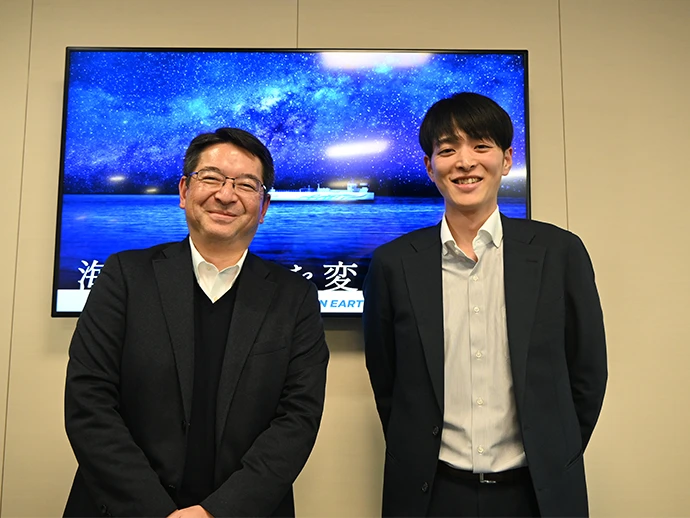
We spoke with Yuki Mizoguchi of NYK’s Environmental Regulation Team, a part of the company’s Decarbonization Group. He has firsthand experience working in India and Bangladesh.
“Recycling a single ship typically takes about six months. While some shipping companies do monitor the recycling process, many outsource the work to third parties and visit the site only for limited periods. At NYK, we place the highest priority on communication with yards through full monitoring of the recycling process. I believe very few shipping companies in the world take this approach.
“Full monitoring encompasses a wide range of activities, including verifying compliance with convention requirements and yard standards, raising safety awareness among workers, and recommending further improvements to facilities and operations.
“Take helmets, for example. Workers may appear to be wearing them properly, but sometimes the helmet is simply resting on the head without the chin strap fastened, meaning it cannot provide proper protection.
“In countries where labor costs are low, workers may understandably focus first on earning income, and safety can become a secondary concern. But if someone is injured and can no longer work, that defeats the purpose entirely.
“Helping instill a strong culture of safety through full monitoring is extremely meaningful work. We examine even the smallest details.”

Yuki Mizoguchi, NYK Decarbonization Group
Several ship-recycling methods are used worldwide, but the most common in South Asia is “beaching.”
Under this method, ships are intentionally driven onto a beach at high tide and dismantled directly onshore. Cutting typically begins at the bow. As a section is removed, the remaining hull becomes lighter and is pulled inland by winches for further cutting. This process is repeated until the ship is fully recycled.
In contrast, many European facilities employ a dry-dock method. By physically separating the vessel from the surrounding marine environment, dry docks reduce the risk of pollution — such as oil spills — and provide safer working conditions with less exposure to weather-related disruptions.
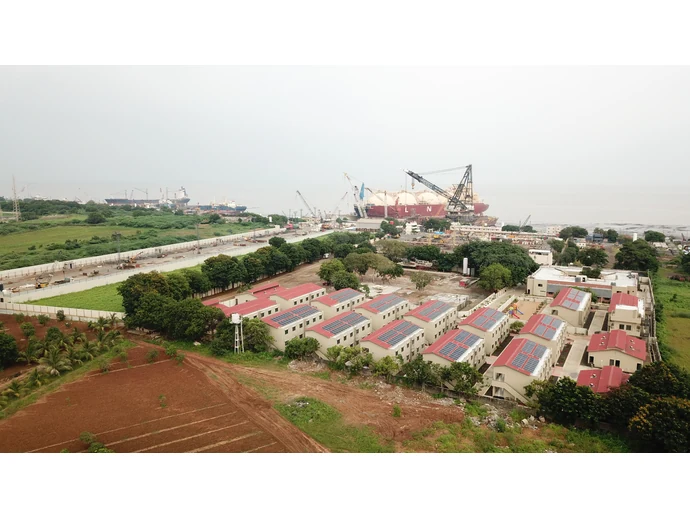
Mizoguchi recently visited the PHP recycling yard in Bangladesh, a facility that uses the beaching method.
“Some people have concerns about worker safety and environmental impacts associated with beaching-based ship recycling. However, these concerns do not apply at yards that thoroughly implement the fundamental requirements of the Hong Kong Convention. What we ask of yards through our full-monitoring approach is not anything especially advanced. It is simply the consistent application of basic principles.”
In 2023, the NYK Group recycled the vessel Kamo at PHP. The project proceeded smoothly and was completed without accidents or injuries.
NYK Completes Vessel Dismantling in Bangladesh | NYK Line
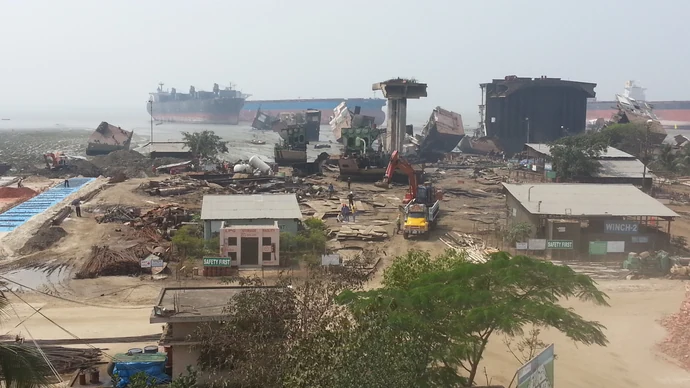
PHP before compliance with the Hong Kong Convention
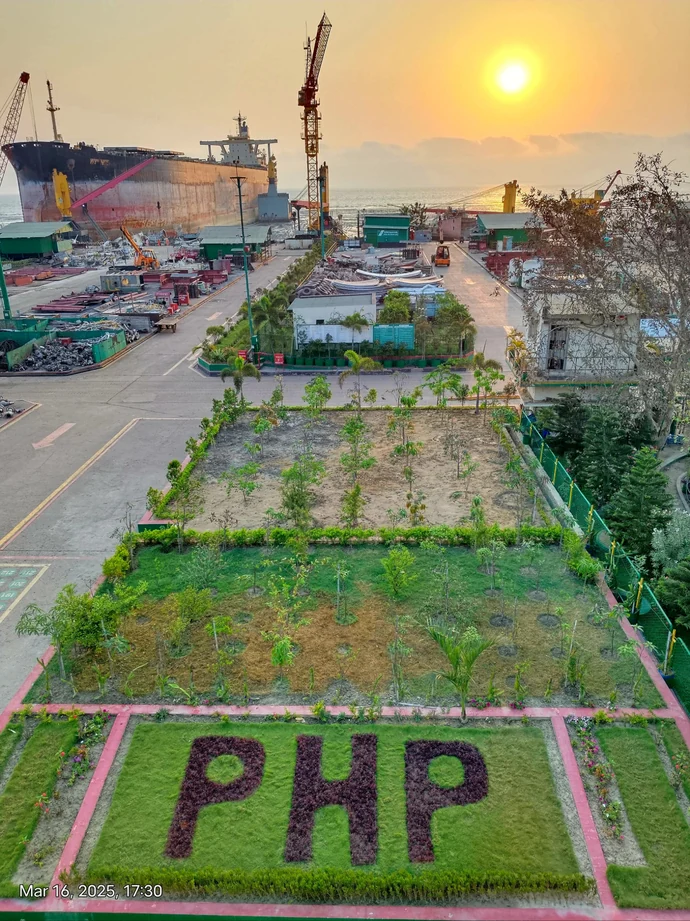
PHP after compliance with the Hong Kong Convention
Although the Hong Kong Convention was adopted in 2009, it took 16 years to enter into force. A key reason for the delay was the challenge of obtaining ratification from enough recycling nations.
Bangladesh, one of the world’s major ship recycling countries, was among those that ratified the convention relatively late.
Initially, Bangladesh may have believed that many local yards would struggle to meet the convention’s requirements and feared that compliance could significantly reduce yard utilization and negatively affect the industry.
Bangladesh ratified the convention shortly after the successful recycling of Kamo. That project may have helped demonstrate that local yards were capable of meeting convention standards.
“With ratification now in place, I expect improvement efforts among other recycling businesses in Bangladesh to accelerate. As a result, Bangladesh has the potential to grow into a country that plays an even more important role in international shipping through ship recycling.”
At NYK-approved yards, which are selected based on standards that exceed those required by the Hong Kong Convention, ship recycling can be conducted with greater transparency while protecting human rights and the environment. This fosters pride and peace of mind among the workers employed at these facilities.
The yards themselves also benefit. By improving safety practices and environmental protection measures through NYK’s guidance, they can strengthen their competitiveness and attract additional ship recycling projects.
The business model of ship recycling differs significantly from what many people typically associate with recycling.
As noted earlier, only a small portion of a vessel ultimately becomes waste. Most materials retain economic value and can be reused as valuable resources. As a result, ships are generally sold to recycling yards through a bidding process rather than being disposed of at a cost.
Some readers may wonder whether limiting recycling to approved yards reduces options and places NYK at a commercial disadvantage.
“Through full monitoring under our approved yard system, we believe we are fulfilling our responsibility as a shipowner to care for vessels from cradle to grave.
"We take pride in the role NYK has played in leading this industry, and with that comes a responsibility to society that we believe we must fulfill. That is why we decided to introduce the approved yard system, despite concerns that it could affect bidding prices. In practice,
approved yards have maintained sufficient capacity, and we have not seen any significant impact on prices.”
Mizoguchi, who is also a marine engineer, also shared a more personal perspective.
“For marine engineers, a ship is a place where we entrust a significant part of our lives. We naturally develop a sense of attachment and gratitude toward the vessels we work on.
That is precisely why I feel responsible for the ship’s entire lifecycle.”
During his visit to Bangladesh, Mizoguchi was encouraged by the pride displayed by workers who were pleased to be employed at an NYK-approved yard. He also felt rewarded by the opportunity to contribute to those working environments.
His next destination will be India. At an approved yard there, recycling of the vessel FP Future is currently underway, with completion targeted for February 2026. To ensure the work is carried out safely and in an environmentally responsible manner, NYK has assigned on-site supervisors from group companies to conduct full monitoring of the process.
Mizoguchi also plans to continue making regular visits, working closely with personnel on the ground as the project progresses.
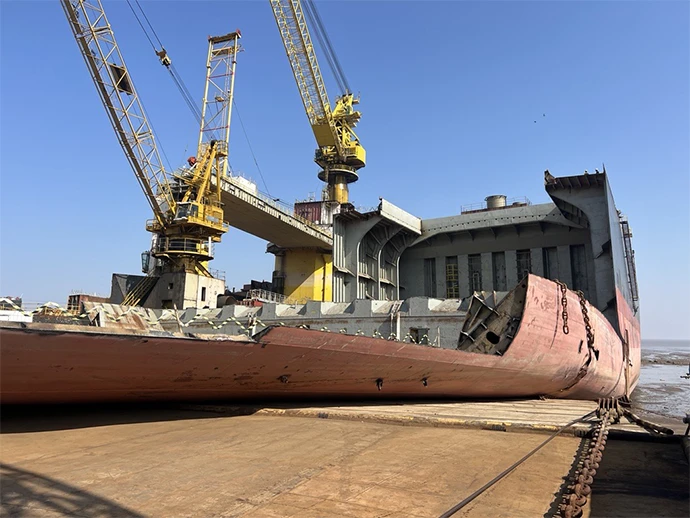
FP Future being dismantled
NYK will continue working to balance environmental protection with the long-term sustainability of international shipping — and to help build a better future. We hope you will continue to follow and support the company’s ongoing journey.
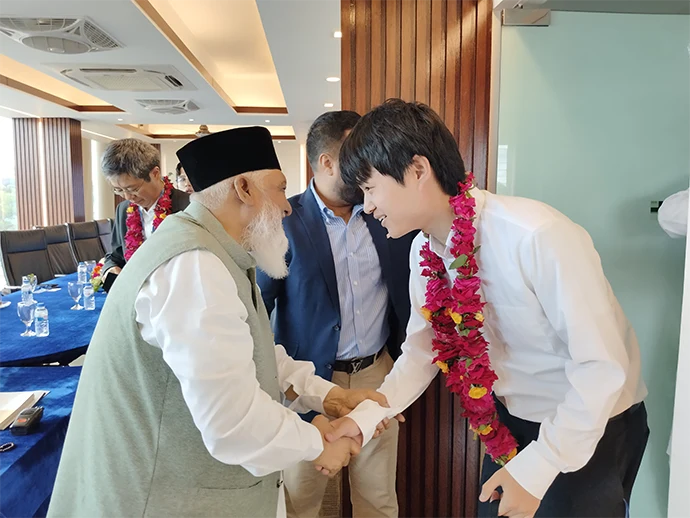
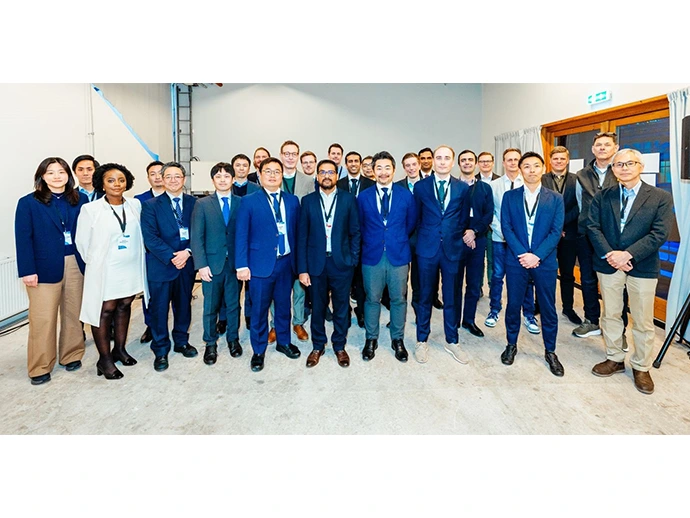
Mizoguchi (right) at an event marking the fifth anniversary of the issuance of the Statement of Compliance, a certification granted after an organization such as ClassNK inspects a recycling yard and verifies that it meets applicable convention requirements and other relevant standards.
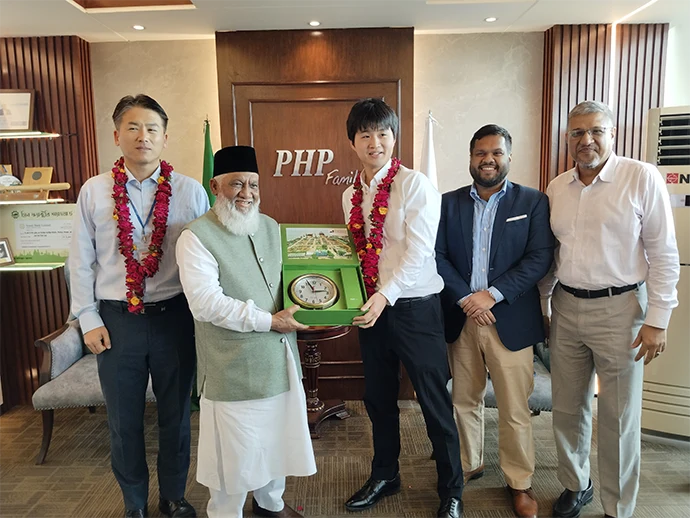
Shunji Imai (left), Deputy General Manager of the NYK’s Decarbonization Group and Manager of NYK’s Environmental Regulation Team
Interview conducted in September 2025.