For NYK FansOur Challenges

When you choose the dark mode display, you can reduce the power consumption and CO2 emissions generated by the website's screen display.
Released : Jul. 09, 2026
Updated : Jul. 09, 2026


Amid worsening global environmental challenges, reducing greenhouse gas (GHG) emissions has become an urgent issue for the shipping industry. To effectively address decarbonization — a challenge that must be tackled globally — countries need to work together under fair and neutral international rules. This article explores the unique complexities of international shipping and introduces NYK’s decarbonization initiatives.
As the global economy continues to grow rapidly, maritime transportation of products and raw materials is also increasing steadily. Reducing GHG emissions to realize a decarbonized society is an urgent task that shipping companies worldwide must collectively address.
To achieve this, international rulemaking is essential. The International Maritime Organization (IMO), a specialized agency of the United Nations, has set a target of bringing GHG emissions from international shipping close to net zero by around 2050. It adopted its initial strategy in 2018 and revised it in 2023.
Meanwhile, the European Union (EU) has introduced its own regulatory framework. The EU Emissions Trading System (EU ETS), originally designed for industries within the EU, was extended to international shipping in 2024. Under this system, shipping companies are required to purchase and surrender EU emission allowances corresponding to GHG emissions generated during voyages related to the EU and while calling at EU ports. An insufficient surrender of allowances will trigger severe penalties.
While the EU regulations alone add complexity, the IMO is now also considering a new mechanism — the “Net-Zero Framework” — to promote GHG emission reductions in international shipping. As a result, the industry faces the challenge of responding to potentially overlapping regulatory systems.
There are additional concerns, one of which is whether fairness among countries and regions is adequately ensured under the EU system.
Yohei Koso, stationed at NYK Group Europe Ltd. in London, points out: “The obligation to purchase emission allowances under the EU ETS applies to companies that emit more GHG than a given benchmark. While there is a transitional period for international shipping, eventually all emissions will be subject to the scheme. The funds collected are managed by the EU Innovation Fund and redistributed as subsidies to companies engaged in decarbonization. The issue is that these subsidies are limited to companies within the EU. While shipping companies outside the EU are equally required to pay, they are not eligible for these returns.”
There are also voices suggesting that receiving funding from the EU Innovation Fund is not easy, even for companies within the EU. Nevertheless, while compliance is required equally both inside and outside the EU, financial returns are effectively limited to EU-based companies. This highlights structural challenges regarding consistency and fairness.
Operational challenges also exist at the field level. Haruna Yoshida, stationed at NYK Bulkship (Atlantic) N.V. in Antwerp, explains: “Under the EU ETS, companies must purchase emission allowances and open accounts within the EU to manage them. However, procedures vary by country, and in some cases, it took nearly a year to open an account. In addition, the regulation defines a ‘shipping company’ not as an operator like NYK but as a shipowner or ship-management company. As a result, multiple accounts are required, and managing and monitoring them increases both workload and costs.”
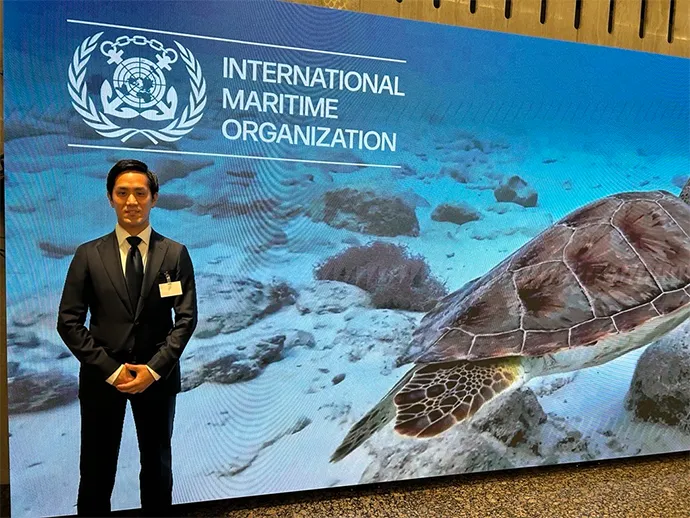
Yohei Koso, stationed at NYK Group Europe Ltd. in London, U.K.
If the IMO’s Net-Zero Framework is introduced, companies may face a double burden alongside the EU ETS. A unified system would be preferable, but it remains unclear which framework will ultimately take precedence. At present, the IMO and EU appear to be in a kind of “tug-of-war.”
To contribute to the establishment of fair and neutral international rules, NYK has dispatched personnel to Europe and is strengthening its advocacy activities. Koso and Yoshida are part of this effort.
According to Koso: “International rulemaking is, in principle, negotiated at the national level. For Japanese companies, coordination with the Japanese government — particularly in IMO discussions — has long been important. However, in the 2020s, Europe has significantly increased its presence by introducing successive decarbonization measures. At NYK, we place importance on obtaining firsthand information locally and maintaining close engagement with the European Commission. This is because the inequality created by regional regulations may disadvantage not only shipping companies but also cargo owners and ultimately consumers. We gather information through seminars and industry events and work with industry associations to carry out advocacy activities.”
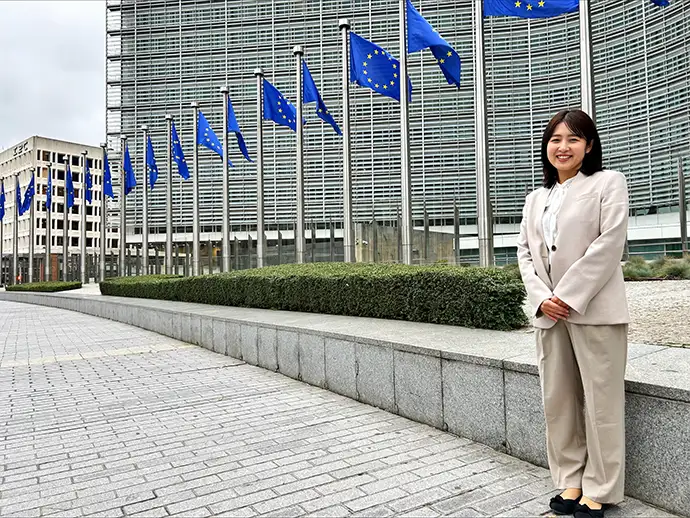
Haruna Yoshida, stationed at NYK Bulkship (Atlantic) N.V. in Antwerp, Belgium
Advocacy activities take place in various settings, including seminars, conferences, and industry events.
Yoshida explains: “One of the challenges is cultural differences. The EU consists of 27 member states, and perspectives may differ among them. There are also highly experienced professionals skilled in advocacy. To have our voices heard, we must build trust on a person-to-person basis. Even within the European Commission, there are individuals who consider the interests of EU citizens when shaping policy. I believe it starts with respecting each person as an individual.”
Earning trust from stakeholders with differing — and sometimes conflicting — interests is not an easy task. However, NYK leverages its unique strengths in this process.
Yoshida continues: “One of the characteristics of the shipping industry is its diversity. It includes tankers, car carriers, cruise ships, and more, and is closely connected with a wide range of industries. Even among companies using shipping, perspectives differ depending on the industry. To establish fair and neutral international rules, it is essential to incorporate all these voices. NYK covers a wide range of sectors and maintains connections with various industry associations. In other words, we can serve as a bridge between different industries. I believe this is a distinctive strength of Japanese shipping companies and contributes to building trust.”
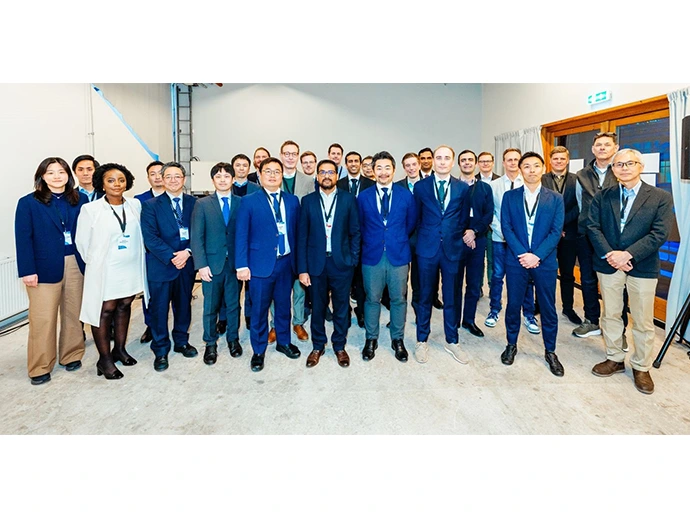
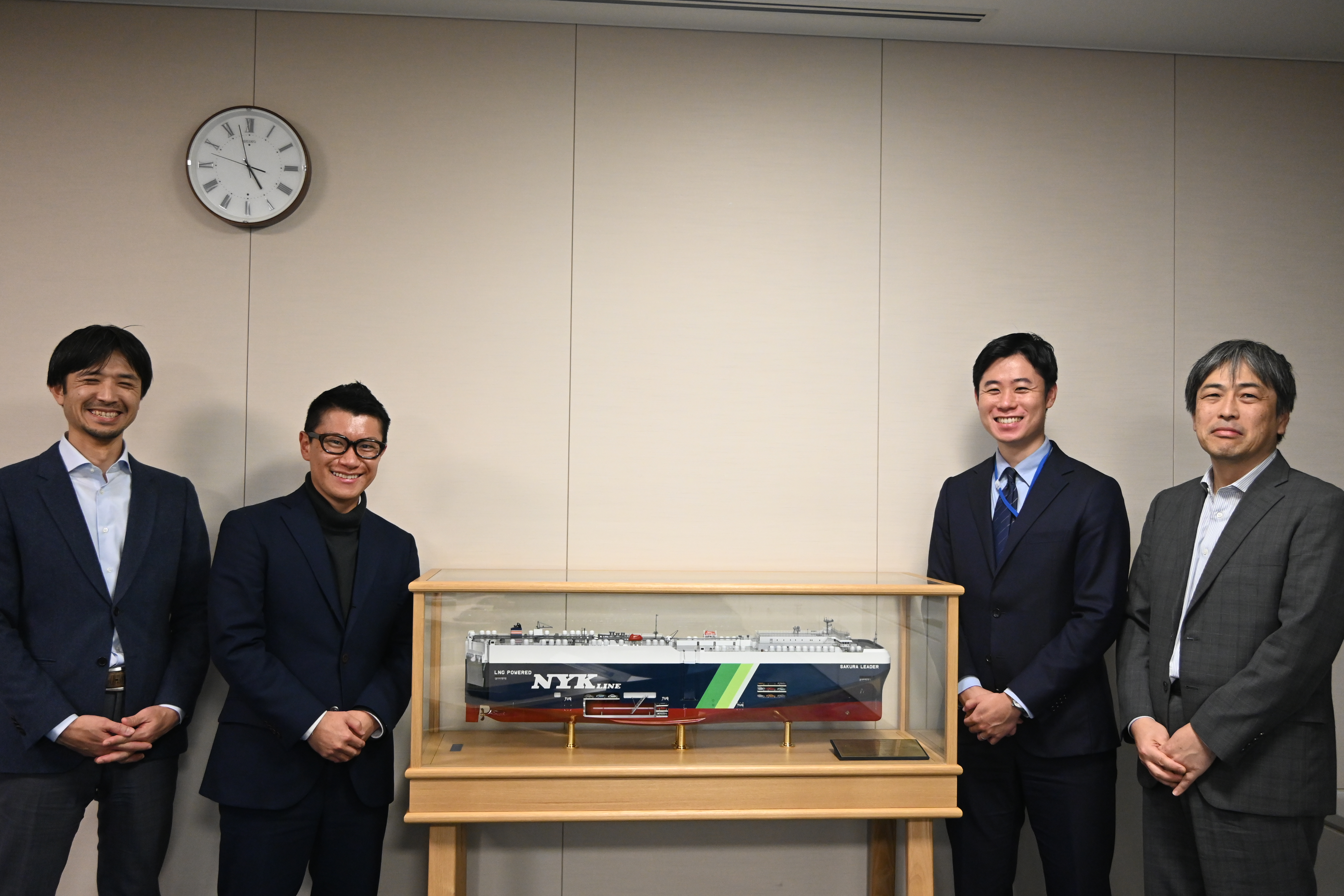
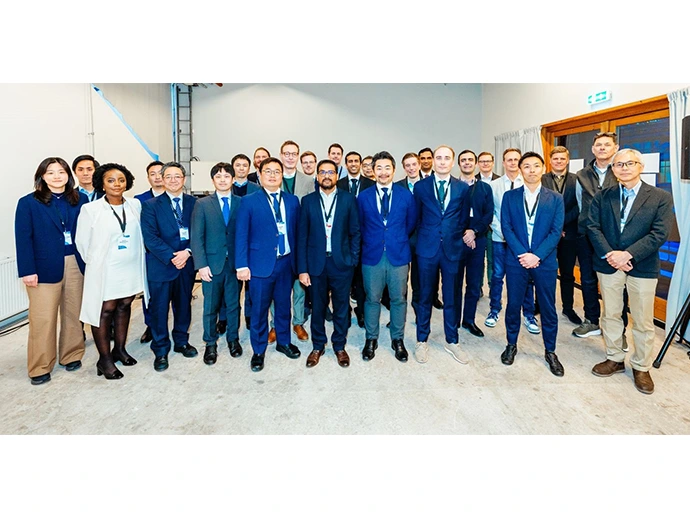
At an SFC event developing GHG emission calculation guidance for Ro-Ro ships. Yohei Mozumi (Decarbonization Group, NYK Line) is in the front row center.
NYK’s advocacy activities extend beyond large frameworks such as the IMO and EU to include issues specific to particular vessel types.
One such example is the development of GHG emission calculation guidelines for oceangoing Ro-Ro ships* that transport automobiles. This initiative is led by Yohei Mozumi of NYK Line’s Decarbonization Group.
Establishing rules for GHG emission reduction requires a standardized method for calculating emissions. However, no unified calculation method had previously existed for oceangoing Ro-Ro ships.
Mozumi explains: “The reason lies in the unique characteristics of Ro-Ro ships. For example, while outbound voyages may be fully loaded with vehicles, return voyages are often empty, and cargo may be partially loaded or unloaded at intermediate ports. Emissions are calculated using emission intensity per route, combined with cargo weight and transport distance. Because shipping companies use different reference points for calculating route-based intensity, results vary widely. This has made fair competition difficult. A globally standardized guideline is necessary to visualize environmental responsibility and ensure credibility.”
At the initial stage, ClassNK, Wallenius Wilhelmsen, and NYK led discussions, conducting hearings with industry associations and exploring the need for a standardized approach.
In Europe, the Smart Freight Centre (SFC), an international NPO, had already developed guidelines for calculating GHG emissions in logistics. These guidelines were being standardized through ISO and were increasingly becoming recognized as an industry benchmark. However, they did not fully reflect the unique operational characteristics of oceangoing Ro-Ro ships.
“They were facing the same challenge, so we thought it would be better to work together,” emphasized Mozumi.
NYK joined SFC and helped establish the Global Ro-Ro Community (GRC) under its framework, with the goal of standardizing GHG emission calculations for Ro-Ro ships. Discussions continued over the course of a year, with participation gradually expanding. Today, member companies represent approximately 80% of global car carrier capacity.
To ensure transparency, discussions were shared not only among GRC members but also with cargo owners and other stakeholders, incorporating feedback throughout the process. Through this open and collaborative approach, a fair and neutral global guideline was developed and published in May 2025.
“Like the advocacy activities in Europe, this is not just a corporate initiative — it is an effort for the future of the global shipping industry,” stressed Mozumi. “While the work requires persistence and continuous dialogue, we take pride in building the foundation for a decarbonized society.”
Through steady advocacy efforts, NYK aims to create an environment in which the entire international shipping industry can address decarbonization in a fair and effective manner. This long-term challenge — balancing environmental protection with economic activity — continues.
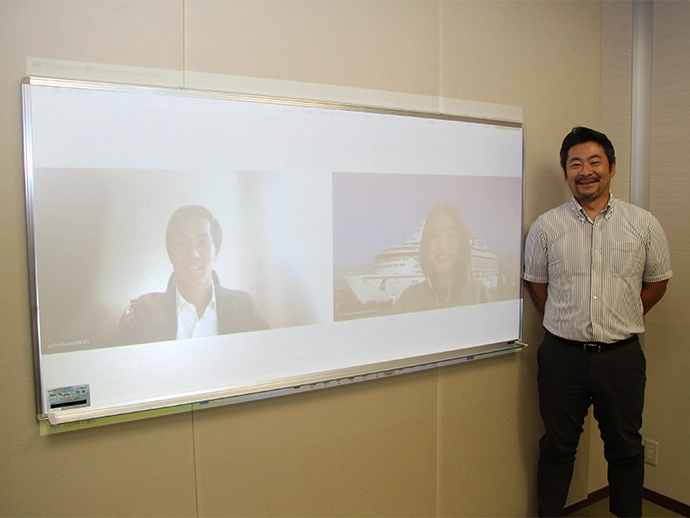
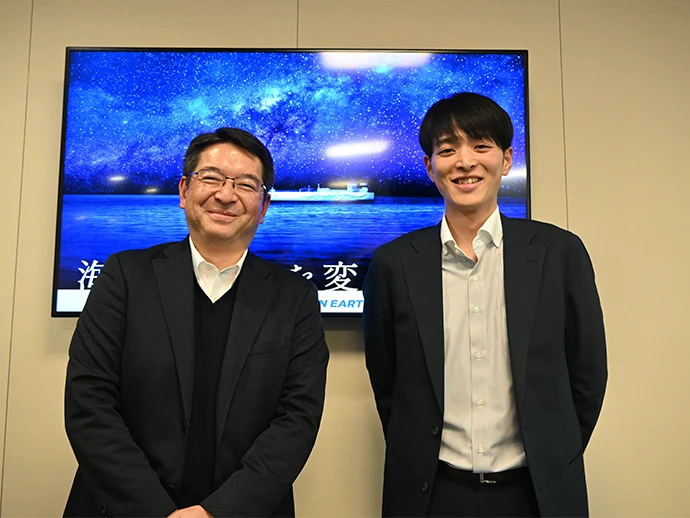
At NYK headquarters meeting room, with Koso and Yoshida participating remotely
* Ro-Ro ship: A roll-on/roll-off vessel capable of transporting cargo such as trucks or trailers on chassis.