Behind the Scenes at NYKStaff Voices


When you choose the dark mode display, you can reduce the power consumption and CO2 emissions generated by the website's screen display.
Released : Sep. 18, 2026
Updated : Sep. 18, 2026


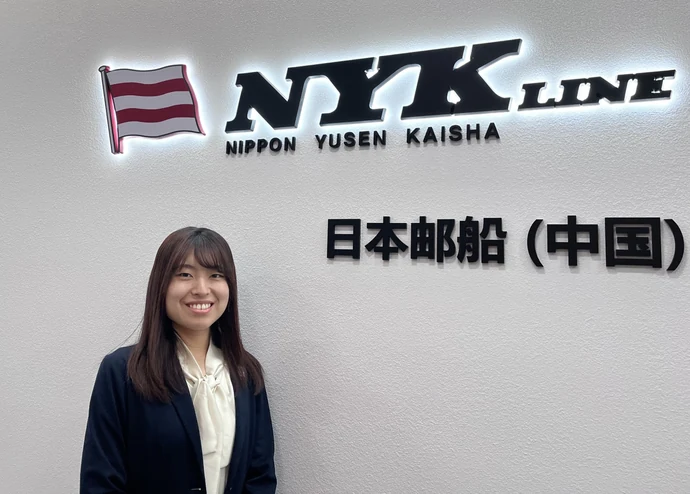
The NYK Group operates a global logistics network with offices in more than 40 countries and regions around the world, and many employees gain experience through overseas assignments. In this series, we introduce the real working lives of young employees who are active on the front lines of international business.
Shanghai, China, is a city of modern skyscrapers that continues to grow as a major center for finance and logistics. It ranks among the world’s leaders in many maritime sectors, including shipbuilding and port cargo handling volume, making it one of NYK’s most important overseas hubs.
Working there as an expatriate at NYK Line (China) Co., Ltd. is Yuki Tsushima, now in the fifth year of her career with the company. We spoke with her about her first overseas assignment as a young employee and her life in dynamic Shanghai.
— Why I Chose NYK Line
As a university student, I majored in law and studied a wide range of subjects, including politics, international relations, and comparative family law in Japan and abroad.
In my third year, I spent a year in Singapore as an exchange student. Seeing Singapore firsthand as a major logistics hub sparked my interest in the logistics industry. Looking at Japan from an overseas perspective also made me want to pursue a career that could contribute to the Japanese economy.
During my job search, I considered several companies. In addition to the two factors I mentioned, I was attracted to NYK because its job rotation system allows employees to gain diverse experience by moving between departments every few years, and because it offers opportunities for overseas assignments. I also had the opportunity to speak with an alumnus who worked at NYK. Being able to clearly picture myself working there ultimately convinced me to apply.
— How I Came to Be Assigned to Shanghai
NYK has a program called “My Career Story,” through which employees have the opportunity to discuss their career aspirations with their supervisors once or twice a year. As part of the program, employees complete a questionnaire outlining their preferences. In my questionnaire, I simply wrote that I wanted “an environment where I could interact with people outside the company and gain new knowledge.” I deliberately did not specify a department or region. I wanted to leave the decision to HR in the hope of discovering opportunities I had never imagined.
After spending about four years in my first department, I received an offer for an assignment in Shanghai as part of my first job rotation. It was an unexpected posting to a city with which I had no prior connection, but I felt it was an opportunity to take on a new challenge. Looking back, I feel that this transfer was, in a sense, exactly what I had hoped for. As a result, I joined NYK Line (China) Co., Ltd. in April 2025.
— First Impressions of Shanghai
Like many cities in China, Shanghai has embraced cashless transactions in nearly every aspect of daily life, from mobile payments and delivery services to public transportation. It is rare to see cash being used in everyday situations.
When I first arrived, I had only just begun studying Chinese and worried that I might not even be able to order food. However, most restaurants rely on mobile ordering and QR code payments, so not being able to speak Chinese has not caused many problems.
To be honest, I never imagined that cashless payment systems would be so deeply integrated into everyday life in China.
Another thing that surprised me is how quiet the city is. Because most cars and motorcycles in Shanghai are electric, even busy streets are remarkably peaceful. The city also has an extensive bicycle-sharing system. No matter where you pick up or return a bicycle, a ride costs only about 1.5 yuan (approximately JPY 30), making it both affordable and convenient. I use it frequently.
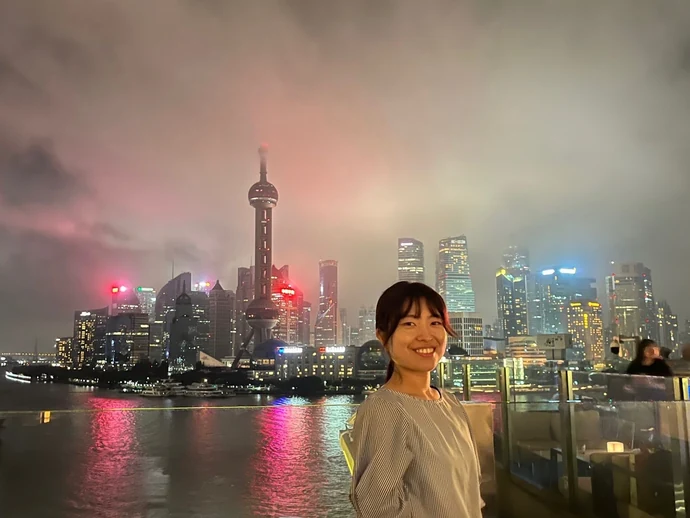
Shanghai’s skyline
— Main Responsibilities in Shanghai
In Shanghai, I work as a member of the Overseas Dry Bulk Group, serving as a sales contact for local customers regarding dry bulk carriers that transport commodities such as iron ore, coal, and grain. In Japan, I worked primarily as an operator, coordinating with captains and vessel schedulers and handling day-to-day operational matters. In a sense, my role was very much on the front lines of operations.
My responsibilities in Shanghai, however, are quite different. I am now more involved in areas such as contract-related work and market research. Gathering local information is also an important part of my job. China holds a significant share of the global shipbuilding market, so it is essential to stay informed about the characteristics and trends of shipyards and to organize and share information that may be valuable to our headquarters. Another important responsibility is monitoring and reporting on new regulations introduced at Chinese ports.
— Differences in Business Culture Between China and Japan
Business moves at a much faster pace in China than in Japan. Many Chinese companies are state-owned and operate with a top-down management style, so once government policies are announced, decisions tend to be made very quickly. In Japan, companies often take time to carefully assess risks before making decisions, and it is not unusual for contract-related matters to take several weeks to finalize. In China, however, such timelines can come as a surprise. Scheduling meetings is another example. In China, it is not uncommon for schedules to be finalized only shortly before the meeting takes place. At first, these differences in business culture were challenging, but I have gradually become accustomed to them.
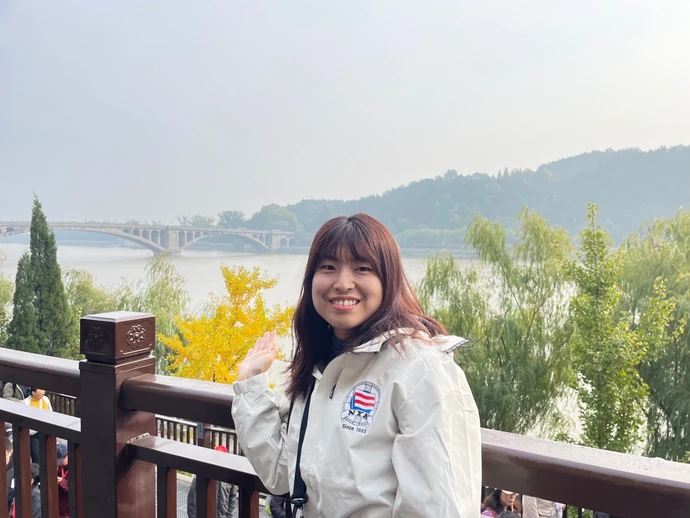
Luoyang, visited during a company trip
— What I Consider Important in My Daily Work
This may partly reflect national characteristics, but I feel that Chinese business professionals project a great deal of confidence in the way they speak and place considerable importance on presenting themselves persuasively. If I communicate in the modest manner that is common in Japan, there is a risk of creating misunderstandings. Likewise, forms of communication that rely on reading between the lines or anticipating another person's intentions, which are often valued in Japan, can sometimes lead to miscommunication in China.
For that reason, it is important to express my views clearly. At the same time, I pay close attention to understanding the other party's concerns and confirming details carefully so that nothing is overlooked or misunderstood. When I was a new employee in Japan, I was focused primarily on completing the tasks directly in front of me. In Shanghai, however, I try to look beyond my immediate responsibilities, anticipate what information may be useful to headquarters, and proactively share it. It is always rewarding when colleagues tell me, “This information was really helpful.”
— Skills Needed to Work Overseas, Including Language Ability
Language skills are certainly important, but what I have come to realize is even more important is the ability to adapt flexibly to the unique environment and culture of a country, as well as strong communication skills. I had never studied Chinese before coming to Shanghai, including during my student years, so I am currently learning the language while working.
English is generally the working language in the office. However, when meeting clients who prefer to communicate in Chinese, I rely on local staff members who are fluent in both English and Chinese to interpret. Regardless of whether someone is proficient in English or Chinese, I believe that having the confidence to communicate actively without being intimidated by language barriers is even more important.
— How I Spend My Days Off
Shanghai is home to many stylish cafés that have become popular through influencers and social media. One of my favorite ways to relax is exploring these photogenic cafés.
I also attend a Chinese language school on weekends. NYK provides partial financial support for employees assigned to non-English-speaking countries to help them learn the local language, and I have taken advantage of that program.
Chinese pronunciation can be challenging, but I enjoy studying languages in general, so I see it as a great opportunity and genuinely enjoy the learning process.
Shanghai is home to many Japanese expatriates because numerous Japanese companies have operations here. Through language school, I have made friends and often go out for meals with them.
One thing I enjoy is meeting expatriates from industries such as apparel and manufacturing, people I would likely never have met had I remained in Japan.
Another advantage is the location of my daily life and workplace, both of which are close to Shanghai Hongqiao International Airport. It makes traveling to other parts of China on weekends very convenient. China is a country with magnificent natural landscapes, rich history, and diverse cultures, and wherever I travel, I feel I discover something new and fascinating.
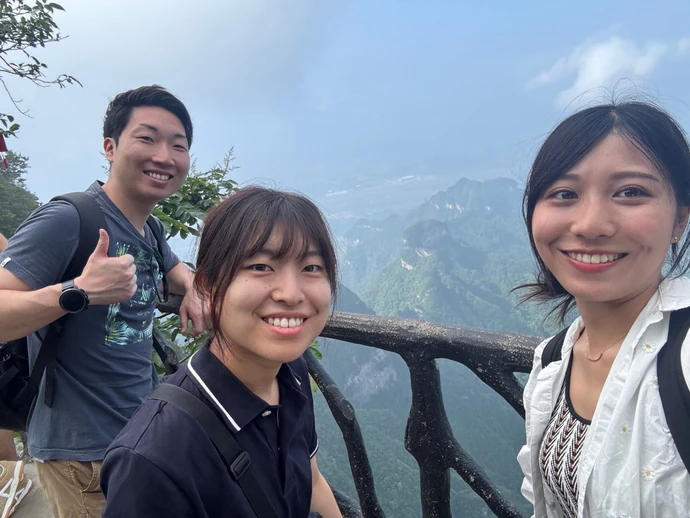
Zhangjiajie, visited with colleagues on a weekend trip
— Favorite Food in Shanghai
Recently, I have become a big fan of revolving hot pot restaurants. Each person has an individual hot pot at their seat, while ingredients arrive on a conveyor belt, much like a conveyor-belt sushi restaurant. The food is both delicious and healthy, which is why I visit quite often.
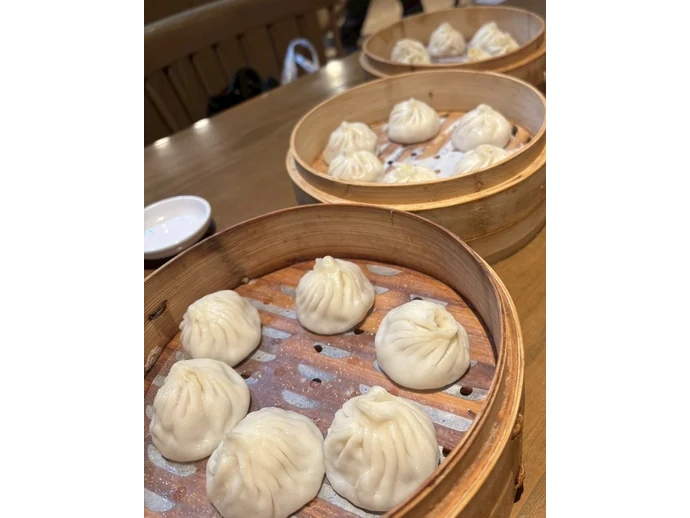
For lunch during the workweek, I frequently eat xiaolongbao and mixed noodles.
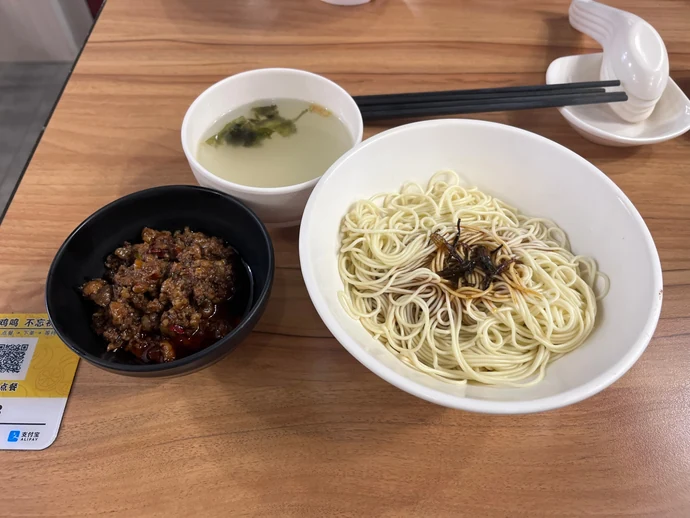
One of my favorite Shanghai specialties is “cong you ban mian” (scallion oil noodles), in which noodles are tossed with fragrant scallion-infused oil. It costs only around 10 yuan (approximately JPY 200) and is both affordable and delicious.
Shanghai offers an incredibly rich food culture, ranging from traditional dishes to cuisine featuring unusual ingredients. I was certainly surprised the first time I was served a duck or chicken dish with the head still attached, though!
— New Perspectives and Lessons Gained Through My Overseas Assignment
In my current role, I feel that I serve as a bridge between Japan and China.
Compared with when I worked in Japan, I now have many more opportunities to consider global economic trends, supply-demand balances, and market developments, particularly those in China. As a result, I have developed a broader and more global perspective. Working in Shanghai has given me firsthand experience of the sheer scale of China's maritime market. This experience has been both highly motivating and deeply rewarding.
— Future Goals and Challenges
I believe Shanghai still offers tremendous opportunities, and my current goal is to gain experience in developing new business opportunities with the support of local staff.
After returning to Japan in the future, I would like to broaden my career by working in departments related to vessel types other than dry bulk carriers and by gaining experience in a wider range of roles, including corporate and administrative functions.
If I have another opportunity to work overseas, I would also like to take an assignment in Southeast Asia, where I studied abroad during my university years.
Although adapting to a new environment and different business practices can sometimes be challenging, I am confident that the experience I have gained in the energetic city of Shanghai will become a valuable asset throughout my career and serve as a major stepping stone toward my next challenge.
Interview conducted in November 2025.