Behind the Scenes at NYKStaff Voices

When you choose the dark mode display, you can reduce the power consumption and CO2 emissions generated by the website's screen display.
Released : Jul. 09, 2026
Updated : Jul. 09, 2026


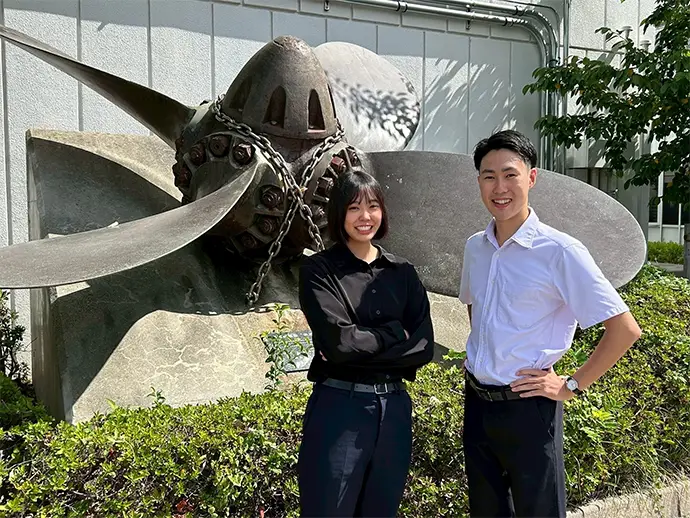
NYK offers an in-house training program for seafarers, enabling new hires from general universities to become maritime professionals operating on a global stage. Participants acquire specialized knowledge at Marine Technical College in Ashiya, Hyogo Prefecture, as well as through onboard training. Over approximately two years, participants aim to obtain national certifications as deck officers or marine engineers. Even without prior maritime education, this program provides a pathway to becoming certified professionals who can build careers both at sea and onshore.
We interviewed two trainees currently enrolled in this program — future mariners in the making.
Kazuho Kaneyoshi, aspiring to become a navigation officer, and Yui Hatori, aiming to become a marine engineer, joined NYK in April 2025 through the in-house training program and are currently studying at Marine Technical College. We asked them about what inspired them to pursue maritime careers, their student life, and their future paths.
— What First Sparked Your Interest in Ships and the Sea?
Kaneyoshi
My grandfather actually worked as a marine engineer, and my mother often told me stories about his job. Because of that, I naturally grew up thinking, “Being a seafarer sounds amazing!”
Hatori
I grew up in a coastal area of Shizuoka Prefecture, so as a child, I often went fishing with friends. Even now, I still love the sea — I even go for drives just to look at it. To be honest, I didn’t know much about maritime careers until I started job hunting, but when I discovered the profession of a seafarer, I remember feeling excited — I thought, “Maybe I could actually work at sea!”
— When Did You Decided to Pursue a Maritime Career?
Hatori
Since I studied in a science field, I originally had an interest in technical onshore roles at NYK and attended a company seminar during my third year at university. After the session on shore-based roles, there was also an explanation of the in-house training program for seafarers. That was the first time I learned that even without specialized education, becoming a seafarer was an option, and it immediately sparked my interest. I also realized I couldn’t quite picture myself working in an office — I preferred a hands-on environment. As for choosing to be a marine engineer, my initial interest in engineering played a role, but ultimately, it was an intuitive decision.
Kaneyoshi
Like Hatori, I attended schools unrelated to maritime studies, but while job hunting, I found myself drawn back to my childhood admiration for my grandfather’s career. Although he was a marine engineer, I personally loved looking at world maps and wanted a job that would allow me to travel across the globe using nautical charts. That’s why I decided to become a navigation officer.
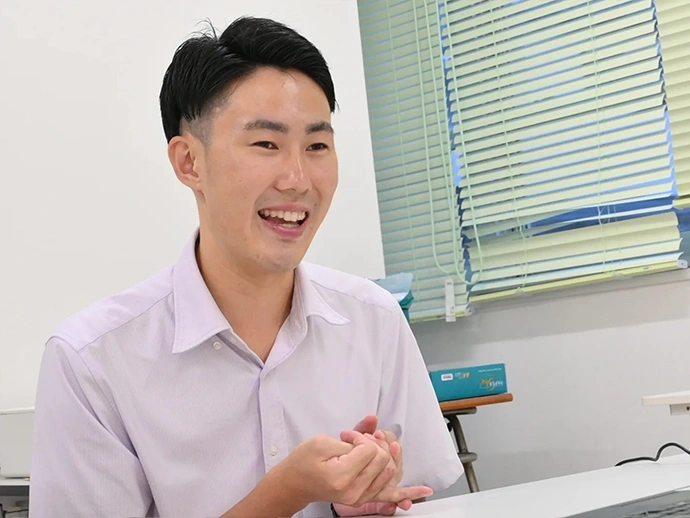
Kazuho Kaneyoshi (Joined in 2025, In-house Seafarer Training Program: Navigation Officer)
— Your Worries About Entering an Unfamiliar Field
Hatori
At university, I studied textiles — specifically towel materials — so I was in a completely unrelated field, constantly working with threads (laughs). When I started job hunting, I was considering automotive manufacturers and even graduate school, but my interest in a maritime career outweighed my anxiety about entering an unfamiliar field.
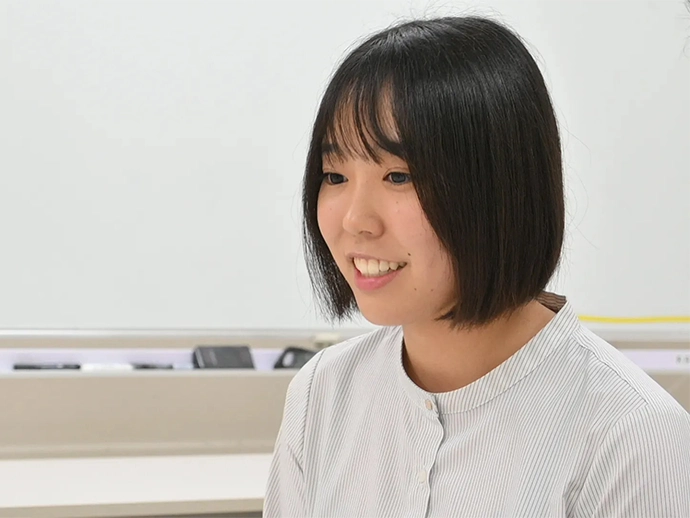
Yui Hatori (Joined in 2025, In-house Seafarer Training Program: Marine Engineer)
Kaneyoshi
To be honest, I initially had doubts. I was in a science faculty where more than 90% of students went on to graduate school. I wondered whether it was okay to make such a major change, but I didn’t want to regret it, so I decided to take the leap.
— How Those Around You Reacted to Your Decision
Kaneyoshi
I told my parents about my decision only after I received the job offer. Because I had often changed my career goals in the past, they initially suggested I think it through carefully. But in the end, my determination to become a navigation officer came through, and now they fully support me.
Hatori
When I first told my parents I wanted to become a seafarer, they imagined fishing boats instead of merchant ships and asked, “Are you going to catch tuna?!” (laughs) But they eventually understood and supported my decision, which made me very happy.
— Why
You Chose
NYK
Kaneyoshi
At the time I was job hunting, only three shipping companies offered in-house training programs. Among them, NYK had launched its program first, in 2006, so I felt it would have a deeper pool of senior colleagues and a stronger support system for trainees.
Hatori
During OB* visits, I felt that NYK employees were very approachable and supportive, and the company made it easy for job seekers to connect with one another. That left a strong impression, and I decided to make NYK my top choice.
* OB comes from the English term “Old Boy” and generally refers to an alumnus — by extension, a graduate or former employee. In Japan, the term is especially common in job hunting through the phrase “OB visit”: an informational meeting in which students speak with alumni working in their target industries.
Kaneyoshi
I felt the same during recruitment events. NYK places trainees without maritime experience together with those who studied maritime subjects, creating an environment where diverse people can interact. It seemed like a very enjoyable place to work.
— The Appeal of Studying at Marine Technical College
Hatori
At regular universities, you often study subjects unrelated to your future job. But here, we focus entirely on skills essential to becoming seafarers, which keeps my motivation high. Living in the adjacent dormitory is also appealing — it allows us to spend time with peers pursuing the same goal and constantly inspire one another.
Kaneyoshi
We also study alongside trainees from other companies, so there’s a lot of interaction and information exchange. Many instructors were active seafarers until recently, so their lessons are grounded in real-world experiences, which makes learning very meaningful.
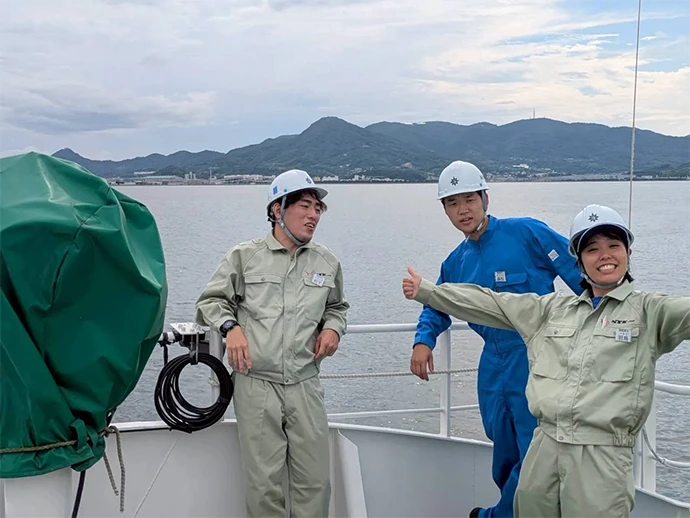
Classmates at Marine Technical College — peers and friendly rivals (Hatori, far right)
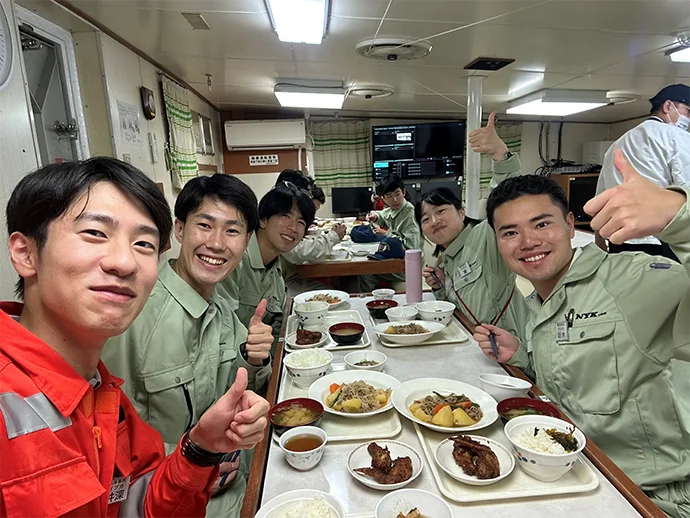
A cheerful mealtime during onboard training, filled with laughter (Kaneyoshi, second from left)
— A Class That Left a Lasting Impression
Kaneyoshi
Onboard training stands out. We’ve had two sessions so far. Some situations allow us to apply classroom knowledge directly, while others require quick judgment, making it a very stimulating experience. When navigating areas like Osaka Bay, vessels such as crane ships and fishing boats may cross our route. I learned the importance of staying calm, communicating with the team, and sharing roles to ensure safe navigation.
Hatori
During training with generators and main engines, I had to tighten bolts to a specific torque, which was physically demanding. Some tasks require as much as 640 newtons of force, which can be difficult to handle alone. At those times, teamwork is essential. These experiences made me realize that communication is not just helpful but a core part of the job. The role of a marine engineer is more diverse than I imagined and depends heavily on strong team coordination.
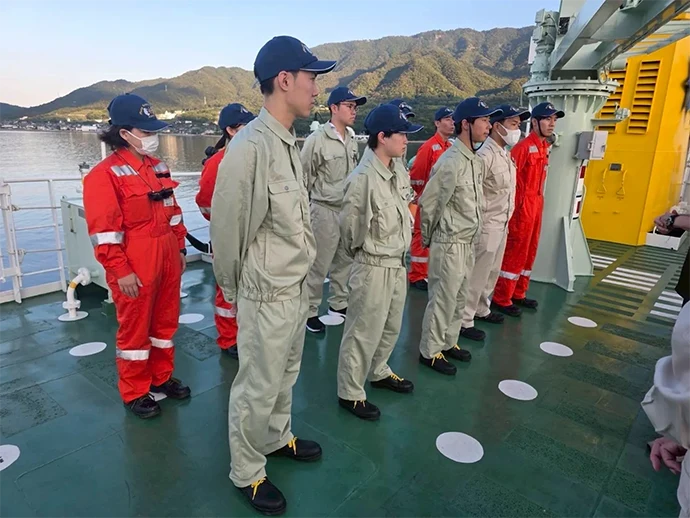
Essential onboard training for becoming a fully qualified seafarer
— Daily Study and Life
Hatori
During training, we work through challenges together in a friendly atmosphere, even though it can be tough. In our dorm life, celebrating birthdays has become a tradition — we prepare cakes and celebrate together. On days off, we go out or have meals with everyone, regardless of affiliation. These bonds with peers are a great source of motivation.
Kaneyoshi
I especially enjoy steering practice — it really makes me feel the appeal of being a navigation officer. It also strengthens our team bonds. And as Hatori mentioned, birthday parties are always a big hit!
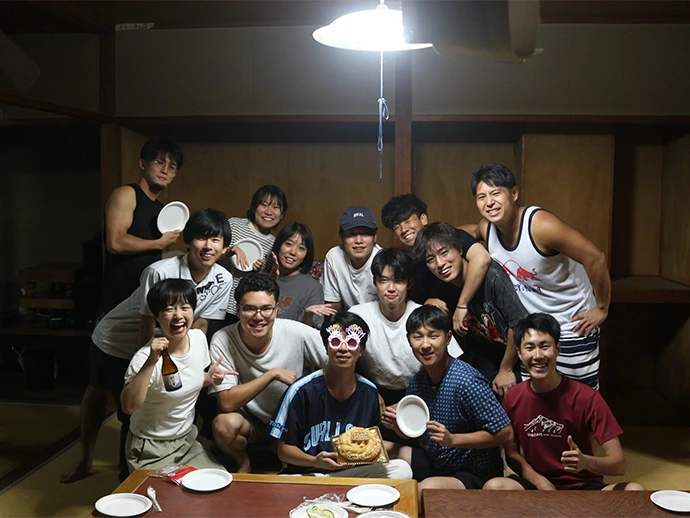
Birthday celebrations that everyone describes in unison as “so much fun”
— Changing Mindset Through Learning
Hatori
Compared to before joining the company, my sense of responsibility has grown significantly. As I learn more about the job, I’ve come to understand not only the enjoyable aspects but also the challenges. For example, the engine room can be extremely hot, so managing your physical condition is crucial. I want to continue improving my skills while being mindful of these realities.
Kaneyoshi
At Marine Technical College, the path to becoming a seafarer is very clear, and instructors speak honestly about both the rewards and challenges. Hearing their experiences has naturally strengthened my determination to become a navigation officer. I want to keep working hard to become fully qualified as soon as possible.
— What Makes a Career at Sea Rewarding
Kaneyoshi
I always wanted a job that combined working globally and working hands-on in the field. The maritime profession allows me to do both, which is exactly why I find it so appealing and rewarding.
Hatori
Shipping is essential to supporting Japan’s logistics. By working at the forefront of this industry, I feel a strong sense of fulfillment in being part of something that connects Japan and the world.
— The Kind of Engineer/Navigating Officer You Aspire to Be
Hatori
So far, I’ve mainly worked on diesel vessels, but my first goal is to become a marine engineer capable of working on turbine ships as well. Ultimately, I want to earn the trust of fellow crew members — both professionally and personally — and become someone they would choose to sail with.
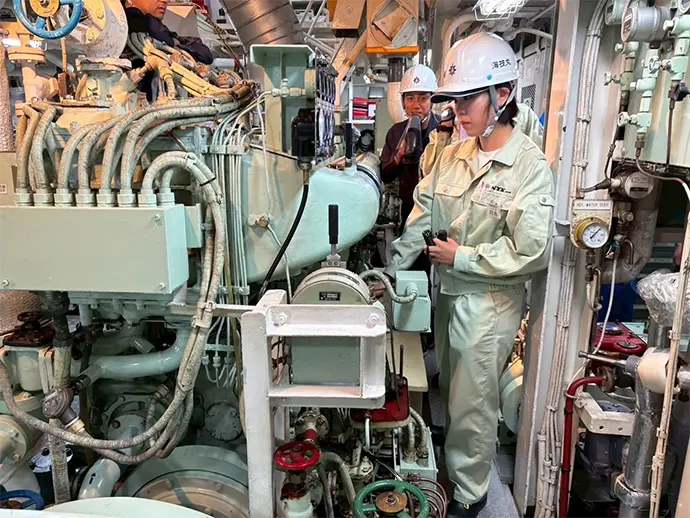
Engine Room Training in Progress
Kaneyoshi
After joining the company, I trained with onshore colleagues for a month. Now they’re already working in their assigned departments, which motivates me. I also want to think ahead about what I can achieve during future onshore assignments through job rotation and broaden my perspective to contribute to the company.
— Advice and Messages for Those Considering a Career at Sea
Hatori
Coming from a general university, the maritime profession was an unknown world to me. But my curiosity drove me to take the step. If you’re even slightly interested, I encourage you to take action. Joining company seminars and OB visits and hearing firsthand experiences was incredibly valuable in helping me understand my interests and aptitudes.
Kaneyoshi
Many students today consider changing jobs after just a few years. However, in maritime careers, it takes at least five years of onboard experience to become a chief officer, and even longer to become a captain. It requires commitment, but the sense of achievement gained through perseverance is immense.
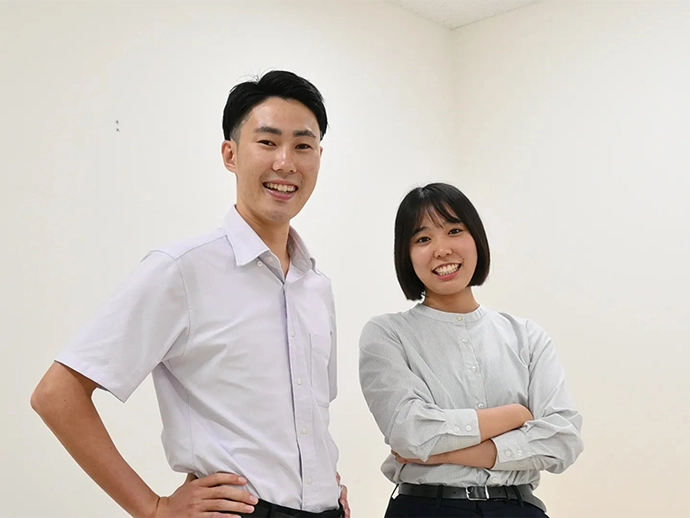
Kaneyoshi and Hatori, working diligently toward their futures as a navigation officer and marine engineer