What is NYK?The World of Vessels

When you choose the dark mode display, you can reduce the power consumption and CO2 emissions generated by the website's screen display.
Released : May 13, 2026
Updated : May 13, 2026


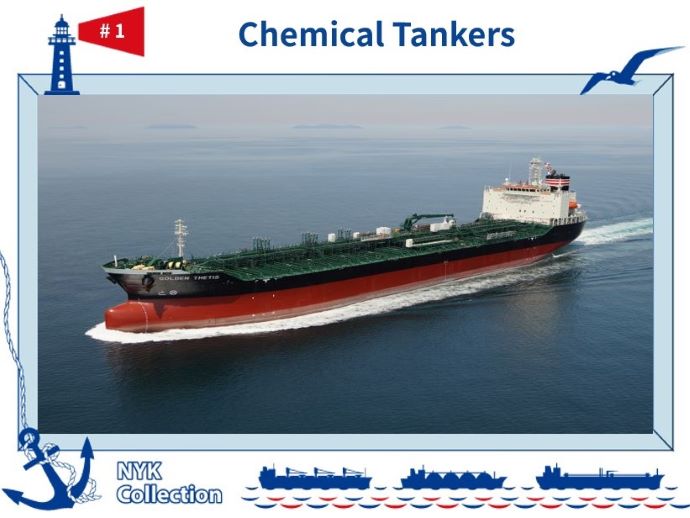
Chemical tanker Golden Thetis, chartered by NYK Energy Ocean Corporation
“Bringing value to life.” Every day, vessels that embody NYK’s corporate philosophy cross the oceans, supporting people’s lives and the global economy. In the NYK Collection series, we take a closer look at the different types of vessels that sustain modern society, explaining their roles in a clear and accessible way.
“Chemical” refers to chemical substances, and chemical tankers are vessels designed specifically to transport liquid chemical products. These liquids are not carried in containers such as drums. Instead, they are loaded directly into the tanks installed inside the ship.
The term “tanker” covers a wide variety of vessels, differing in the type of liquid cargo they carry, their onboard equipment, and their size. Among them, chemical tankers are generally smaller oceangoing vessels that can transport multiple types of liquid cargo in relatively small quantities. Because they can also call at smaller terminals, chemical tankers are often described as highly maneuverable and flexible vessels.
Tankers that transport petroleum products such as gasoline or kerosene are known as product tankers. The distinction between chemical tankers and product tankers is not always clear-cut, as some cargoes can be carried by either type of vessel. This is where the International Maritime Organization (IMO) cargo classification comes into play. Liquid cargoes such as chemicals and petroleum products are categorized according to their hazard level:
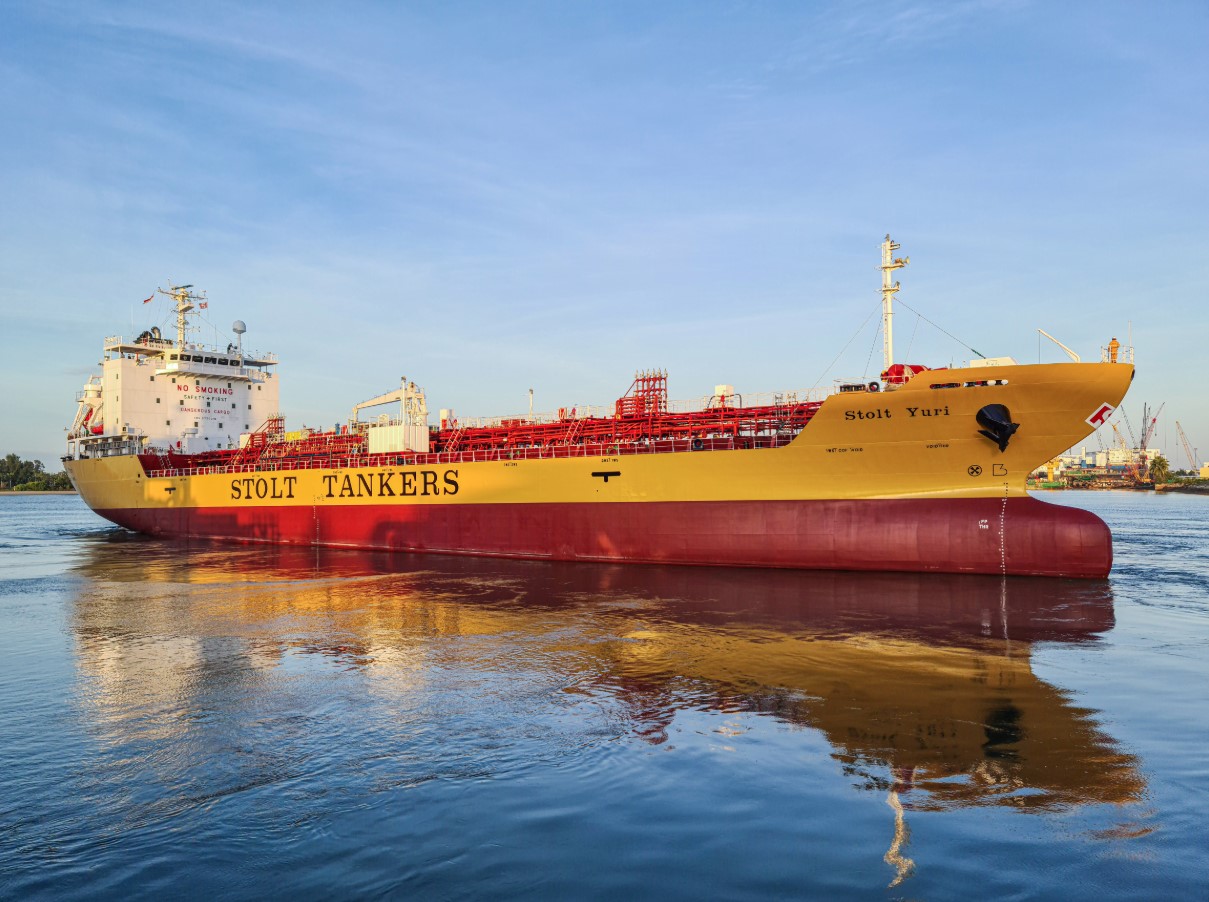
Chemical tanker Stolt Yuri (approx. 12,000 DWT), owned by NYK Stolt Shipholding Pte. Ltd. and operating on intra-Asian routes
The interior of a chemical tanker is divided into numerous independent tanks. On short regional routes, vessels typically have 14 to 20 tanks, while long-haul chemical tankers may be equipped with 30 to 50 tanks. Each tank can carry a different liquid cargo, making it possible to transport multiple products simultaneously — for example, chemicals in one tank and olive oil in the adjacent tank — without risk of contamination.
In the past, chemical tankers often followed parceling operations, calling at multiple ports to load and discharge small quantities of different cargoes. Today, however, larger cargo lots are common on many Asian routes, making single-lot transportation more economical. Operating styles vary by route. On Australian routes, where many products are imported, it is not unusual for every tank to carry a different cargo. On long-haul routes to Europe or North America, parceling operations involving multiple ports are still practiced.
.jpg)
Chemical tanker Stolt Bismuth (approx. 25,000 DWT), owned by NYK Stolt Tankers S.A. and operating on deep-sea routes
Chemical tankers can carry a remarkably wide range of liquids, including petroleum products such as kerosene, naphtha, and gasoline; hazardous chemicals such as sulfuric acid, methanol, and nitric acid; and familiar products such as olive oil, citric acid, rapeseed oil, palm oil, as well as fruit juices including apple and orange juice — all transported in completely segregated tanks.
For example, methanol is increasingly in demand as a raw material for construction adhesives and as a fuel with lower carbon dioxide emissions. Palm oil is used in products such as soap, while sulfuric acid serves as a raw material for fertilizers, agricultural chemicals, and pesticides.
Because of this diversity, tank materials are critical. Tanks may be constructed from corrosion-resistant stainless steel or coated with zinc paint or phenolic epoxy resin. All tanks are equipped with pumps designed to withstand corrosive cargoes. Some tanks are fitted with heating systems, using steam pipes installed along the tank walls to maintain appropriate viscosity during loading and unloading operations. Deck-mounted eyewash stations and emergency showers are another distinctive feature of chemical tankers, enabling immediate response in the event of chemical exposure.
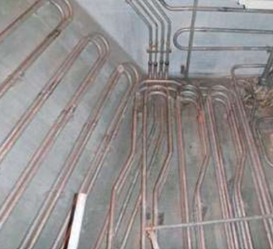
Heating System: A system for transporting cargo while maintaining it at a high temperature. By circulating high-temperature steam through pipes installed along the tank walls, the tank's internal temperature is maintained.
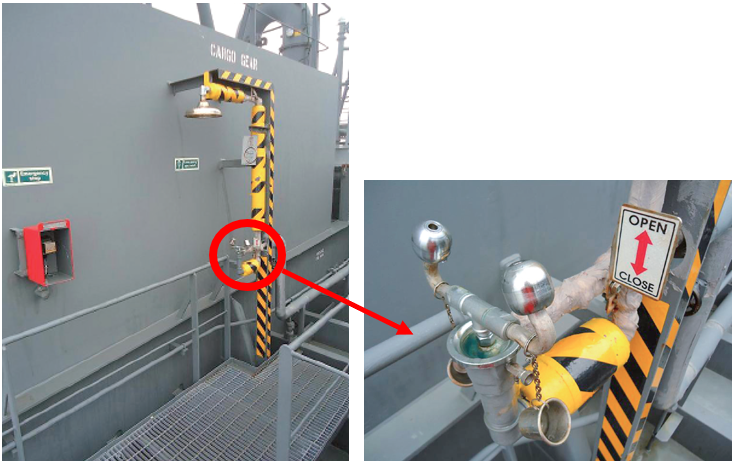
Eyewash: If hazardous chemicals come into contact with the human body, a shower stand and an eyewash station are located on deck so that they can be used immediately.
As is well known, many chemical substances must never be mixed. Loading a different liquid into a tank that still contains residues from a previous cargo can trigger dangerous chemical reactions. In some cases, certain cargoes cannot even be loaded into adjacent tanks. In addition, there is a rule known as the “Last 3 Cargo” requirement. Depending on the types of cargoes carried during the previous three voyages, restrictions may apply that prohibit specific cargoes from being loaded into the same tank. Even when the cargo is not a chemical product, loading fruit juice into a tank that previously carried vegetable oil without proper cleaning would compromise cargo quality. For this reason, tank cleaning is a critical mission for chemical tanker crews.
Once a vessel calls at port and cargo has been discharged, tank cleaning begins before the next liquid is loaded. The procedures are defined by international standards. A typical cleaning process starts by rinsing the tank with seawater heated to around 60–70 C, followed by cleaning with detergent and another seawater rinse. Next, hot steam is introduced into the tank to loosen contaminants absorbed into the tank’s coating, which are then washed away with distilled water. Today, these operations are carried out using onboard equipment, but in the past, crew members would manually wipe every corner of the tank with mops. To avoid contamination, they wore freshly washed work clothes and shoe covers, taking care not to let even sweat drip inside the tank. It was physically demanding work, often performed with towels wrapped around their heads.
Upon request, a surveyor conducts a wall wash test after tank cleaning. Chemicals are sprayed onto the tank walls to detect any remaining substances, and only after passing this inspection can the next cargo be loaded. In some cases, meeting all the required conditions can take as long as 10 days to two weeks. The essence of chemical tanker operations lies in the meticulous care and expertise required to maintain cargo quality, from loading through to final discharge, for cargoes entrusted by customers.
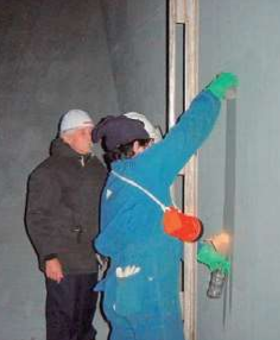
Wall Wash Test: Measures substances adhering to the surface of cargo tanks. Inspectors spray a reagent onto the tank walls and analyze the components contained in the runoff. Inspections are conducted particularly rigorously before loading methanol; a salt concentration of 0.5 ppm or less is generally required to pass. This level corresponds to approximately 2 milliliters of seawater in 200 liters of water.
To enable efficient tank cleaning, chemical tankers are designed with as few internal structural protrusions as possible. Instead of flat walls with reinforcing members, tanks use corrugated walls, which provide sufficient strength while reducing surface area. Reinforcing members are also placed outside the tank lids on deck, keeping the tank interior smooth and easy to clean.
The deck is lined with complex piping systems connected directly to each tank. These pipelines converge at the manifold, where shore facilities are connected for loading and unloading cargo.
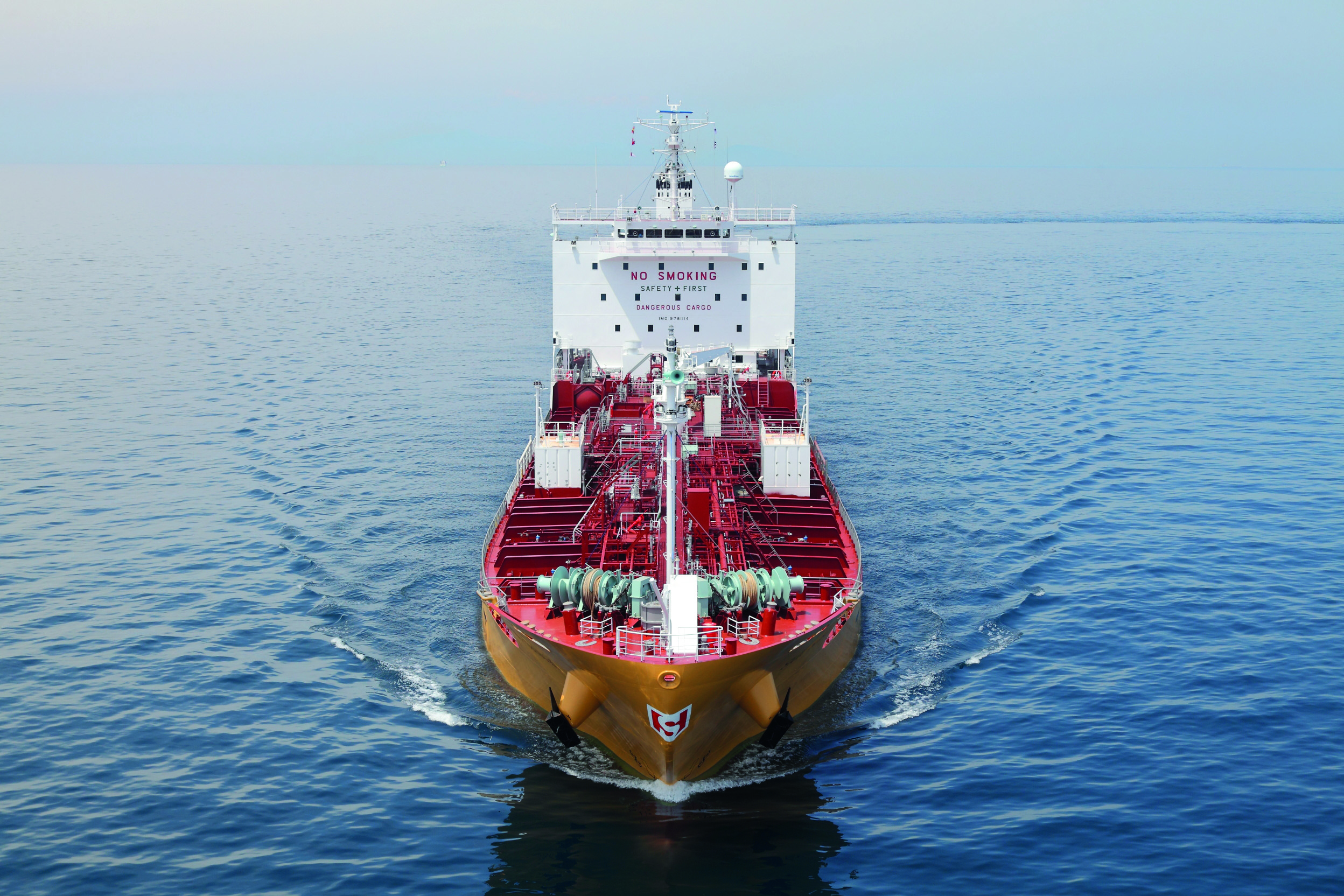
Chemical tanker Stolt Satsuki (approx. 12,000 DWT), owned by NYK Stolt Shipholding Pte. Ltd. and operating on intra-Asian routes
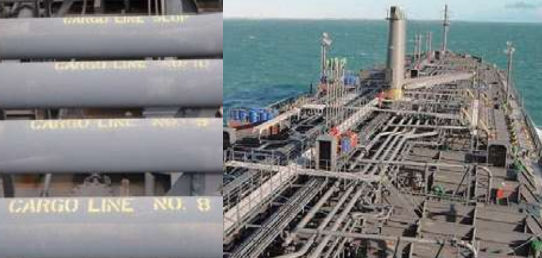
Pipelines: Transfer pipes for transporting cargo from each tank’s pumps.Connected through the central manifold to onshore facilities.
In addition to safety and efficiency, NYK is actively working to reduce environmental impact. Methanol carriers capable of using their cargo as a cleaner marine fuel have already been introduced, and chemical tankers are also transporting feedstocks such as used cooking oil and animal fats for sustainable aviation fuel (SAF). Small in size but requiring meticulous care, chemical tankers safely and reliably transport a wide variety of liquid products essential to everyday life.
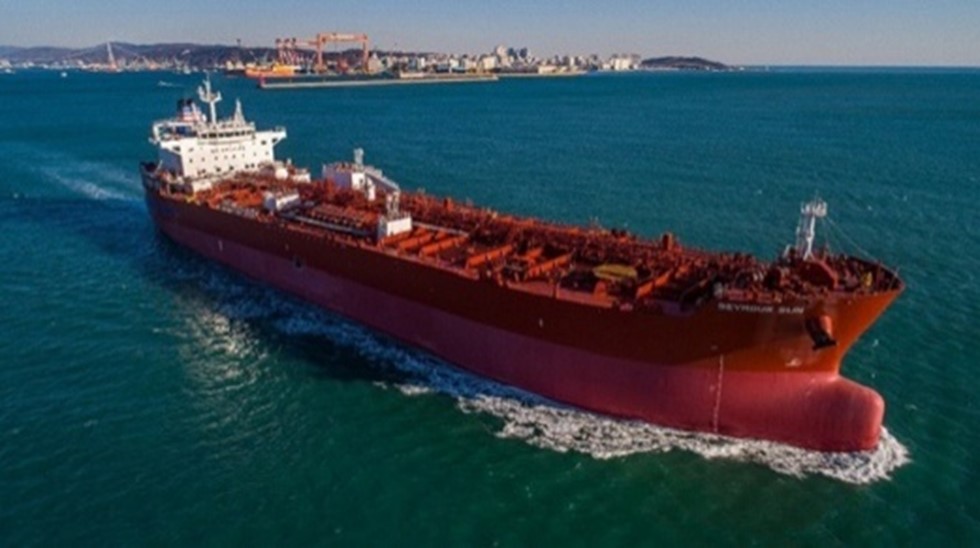
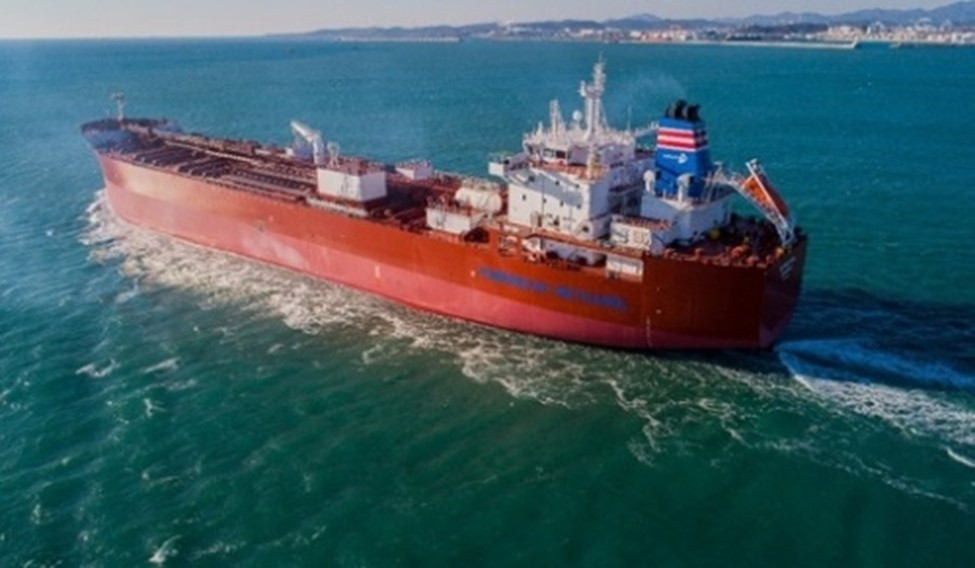
Seymour Sun, a dual-fuel vessel equipped with engines that reduce nitrogen oxide (NOx) emissions
As of September 2025, NYK Line itself does not own any conventional chemical tankers; however, it continues to be actively involved in the chemical tanker business.
Through joint ventures with Stolt Tankers, NYK operates NYK Stolt Tankers S.A., which owns 9 large chemical tankers deployed on long-haul routes, and NYK Stolt Shipholding Pte. Ltd., which owns 11 small chemical tankers operating on intra-Asian routes. Chartering
and vessel operation are handled by Stolt Tankers. In April 2025, NYK Energy Ocean Corporation (NEO) was established as a consolidated subsidiary, further expanding NYK’s chemical tanker business.
In addition, NYK is also engaged in the product tanker business. Through NYK Bulkship (Asia) Pte. Ltd., the Group owns and operates eight medium-sized product tankers. Some of these vessels, equipped with zinc-coated tanks, are being deployed for methanol transportation as part of ongoing initiatives.