What is NYK?The World of Vessels

When you choose the dark mode display, you can reduce the power consumption and CO2 emissions generated by the website's screen display.
Released : Apr. 22, 2026
Updated : Apr. 22, 2026


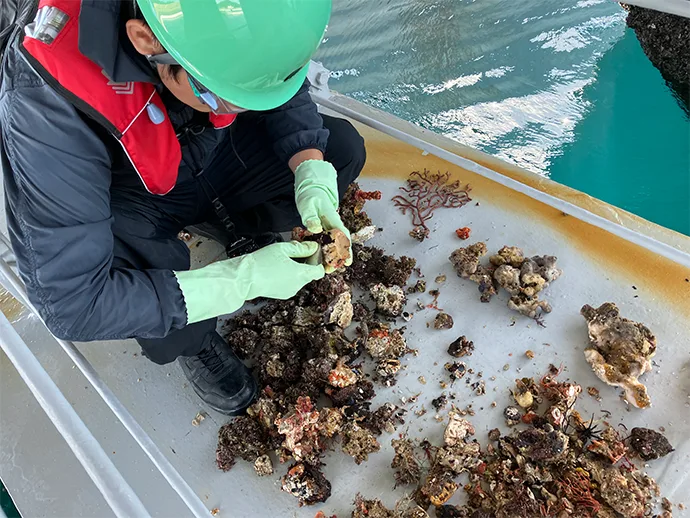
What was once considered a nuisance clinging to ship hulls may one day become the source of future medicines. In collaboration with Chuo University, NYK is advancing an unprecedented project to discover unknown valuable substances and apply them to drug discovery. By leveraging ideas and scale that only NYK can realize, this initiative seeks to harness the bounty of the sea and illuminate humanity’s future.
To explore the significance of this joint project between Chuo University and NYK, as well as its future prospects, we spoke with Arihiro Iwasaki, associate professor at Chuo University’s Faculty of Science and Engineering, who leads the research; Takato Ohhigashi of NYK’s Innovation Promotion Group; and Ryo Yamanaka, a ship captain.
— Project Overview and Objectives
Ohhigashi:
At NYK, sustainability is positioned at the core of our management. Under the theme of “giving back to the oceans, earth, and people,” we have established a framework known as the NYK Group Sustainability Initiative. Through a wide range of activities — including ideas proposed by volunteer employees — we work to address social and environmental challenges.
The joint research project between Chuo University and NYK aims to discover substances derived from marine organisms that can serve as the basis for medicines and to clarify the value they may offer to humanity. In this project, NYK participates by coordinating the sampling environment for organisms attached to ship hulls.
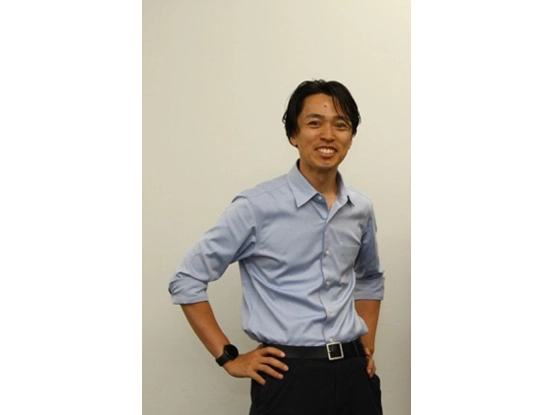
Takato Ohhigashi, Innovation Promotion Group
— Conceived Over a Decade Ago and Realized Through the NYK Group Sustainability Initiative
Iwasaki:
My research focuses on discovering substances from marine organisms that can serve as the basis for medicines. The idea for this project dates back more than 10 years. Captain Yamanaka of NYK and I were classmates in high school. While talking about our respective jobs, he mentioned that large amounts of marine organisms adhere to ship hulls, worsening fuel efficiency and speed performance. These organisms are scraped off and discarded every few years.
I wondered whether these organisms could instead be utilized as a source for marine biological sampling.
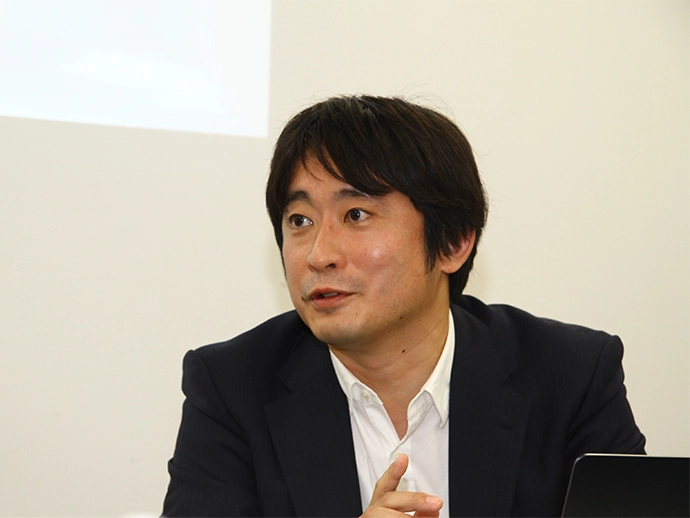
Arihiro Iwasaki, Associate Professor, Faculty of Science and Engineering, Chuo University
Yamanaka:
When I first heard Professor Iwasaki’s idea, I thought it was a very inspiring concept. However, at the time, I could not think of a concrete way to make it a reality, so it remained just an idea.
More than 10 years later, while I was working at NYK’s head office, the company launched the NYK Group Sustainability Initiative, an activity designed to tackle social challenges. When Professor Iwasaki and I revisited this idea after a long time, I realized it could be realized within this framework, so I developed the proposal and submitted it.
Fortunately, the internal response was very positive. With the support of the Sustainability Group, which serves as the initiative’s secretariat, we decided to begin with a proof-of-concept experiment. Around that time, it had already been decided that I would return from an onshore position to onboard duty. However, Ohhigashi, who was in the same group at the time, joined the project and showed strong interest, allowing for a smooth handover.
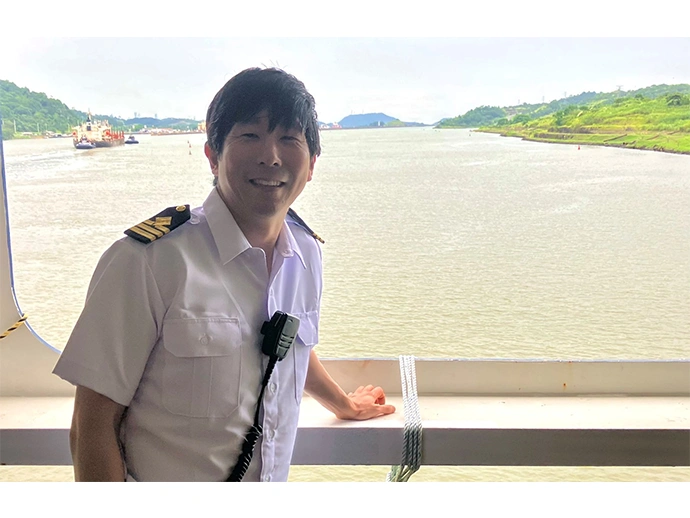
Captain Yamanaka during the interview, on board a vessel transiting
the Panama Canal
Ohhigashi:
To be honest, I felt a strange sense of pressure — thinking it would be a problem if results stopped appearing the moment I took over. Since this initiative has no global precedent, it requires strong initiative and action. I wanted to achieve tangible results before Yamanaka returned.
The fact that the proof-of-concept experiment succeeded and that the project has now become something we can share publicly is deeply moving.
Professor Iwasaki focuses on natural products uniquely produced by marine organisms. While inefficiencies in sampling had long been a challenge, collaboration with NYK led to a breakthrough.
— Why Focus on Marine Organisms?
Iwasaki:
Roughly half of the new drugs approved over the past 40 years were developed based on chemical substances produced by living organisms, known as natural products. This means that discovering new natural products could dramatically accelerate pharmaceutical development.
Professor Satoshi Omura, who received the Nobel Prize in Physiology or Medicine in 2015, discovered the basis for a breakthrough medicine from microorganisms living in the soil of a golf course in Shizuoka. Revolutionary substances do not necessarily reside deep in the Himalayas or the Amazon — they may exist in very familiar environments.
While terrestrial plants and microorganisms have been studied for a relatively long time, marine organisms remain largely unexplored and hold great potential. My research has therefore focused on organisms inhabiting coral reef environments in regions rich in marine biodiversity, such as Okinawa and the Amami Islands.
— Conventional Methods of Collecting Marine Organisms
Iwasaki:
Until now, students and I traveled to collection sites and gathered marine organisms by hand. This was extremely demanding work. We had to search vast areas for scattered organisms, and sampling was limited to spring tides during low tide periods — generally between March and July. Even then, we could work for only about four hours a day.
On some days, we collected only around one kilogram. Despite these challenges, we achieved research outcomes, including the discovery of novel substances with potential applications in anticancer drugs. While rewarding, the inefficiency of this process had long been an issue.
— Acting as a “Pilot” for Sampling Hull-Attached Organisms
Yamanaka:
For the proof-of-concept experiment exploring natural products from organisms attached to ship hulls, we initially obtained samples from within the NYK Group, including hull-cleaning diver companies, auxiliary fuel manufacturers, and tugboat shipyards.
Through this process, we learned that vessels with long operating hours were not always ideal. In fact, vessels and offshore structures that remain moored for extended periods proved more suitable in many respects.
However, there were limits to collecting samples solely within the NYK Group. We therefore shifted our approach. Rather than providing biological samples directly to Chuo University, we leveraged NYK’s maritime network to coordinate sampling activities.
Conducting sampling in maritime industry settings requires not only information about where such sites exist, but also extensive know-how to ensure safety. By coordinating these activities, NYK enables Chuo University to access maritime industry sites that were previously unreachable.
Specifically, we identify vessels and sites likely to host target organisms, arrange sampling operations, and supervise safety during collection. In essence, we act as a kind of “pilot” guiding sampling efforts in ships and maritime industry environments.
— Exploring Natural Products from Hull-Attached Organisms
Iwasaki:
Previously, we struggled within tight time constraints. Being able to collect samples without worrying about timing or seasonality has been a major advantage.
In Nagasaki, for example, we obtained 35 kilograms of hull-attached organisms in just two hours — an overwhelming improvement in efficiency. Furthermore, samples collected in Okinawa during the proof-of-concept experiment led to the discovery of a new substance. Analysis revealed that this substance inhibits the growth of the pathogen responsible for African sleeping sickness.
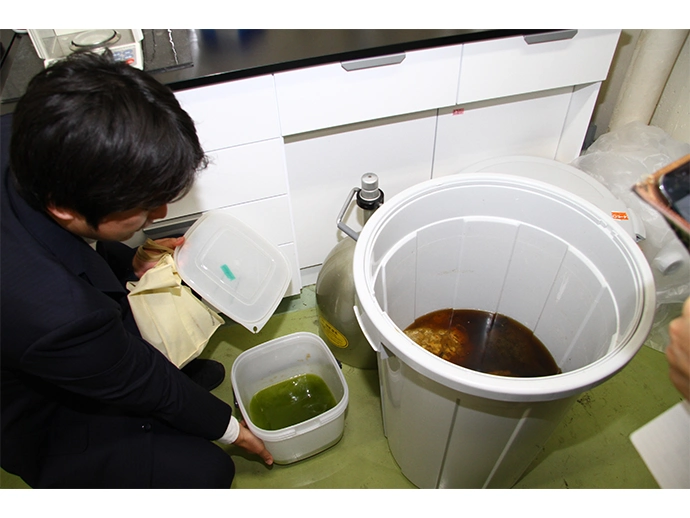
In Professor Iwasaki’s laboratory: marine organism samples stored in plastic buckets
— The Value of the Project
Iwasaki:
When we collect marine organisms, local residents often ask, “Why would you gather something like that?” But once we explain that the samples are used for research, people become very supportive. The transformation of something regarded as a nuisance into unexpected value is what makes this project so fascinating.
Yamanaka:
For both seafarers and shore-based operations staff, hull-attached organisms are undeniably a nuisance. The idea that these organisms could become a treasure trove for discovering groundbreaking medicines is the primary reason why this project has received such strong support within the company.
Iwasaki:
After collection, research involves handling extremely small quantities — sometimes as little as 1 milligram or even 0.1 milligram — requiring delicate and meticulous work. Structural analysis to elucidate molecular structures is the climax of this research.
Comparing the structure I have determined with existing chemical databases and seeing “no hits” is profoundly rewarding. It means encountering a substance unknown to all of humanity until that moment.
Yamanaka:
With advances in artificial intelligence, approaches to drug discovery may change dramatically. However, considering the profound complexity of nature, it is difficult to believe that AI alone can fully unravel biodiversity. Professor Iwasaki’s research challenges that mystery, and its value is universal.
Iwasaki:
Natural products condense hundreds of millions of years of life’s history. They embody the wisdom organisms have developed to survive. Because the human body is extremely complex, substances designed purely through scientific reasoning may fail to produce intended effects or cause unexpected side effects.
Learning from natural products created by nature itself is therefore essential. Effectively utilizing natural products may be the shortest path to drug discovery that truly benefits humanity.
The proof-of-concept experiment with Chuo University began in 2022, and following successful outcomes, a formal joint research agreement was concluded in 2025.
— Future Outlook
Ohhigashi:
The project is scheduled to run for five years. While discovering substances that directly lead to new medicines will not be easy, we aim to achieve meaningful results and work toward extending the project. By expanding our network of partners, we hope to increase opportunities for sampling.
Iwasaki:
It is often said that finding a truly groundbreaking and valuable substance once every 10 years is considered fortunate. The probability of such a substance ultimately becoming a drug is estimated at one in 30,000. This underscores the need for patience and long-term commitment.
Even if we do not reach the goal of producing a new drug, it is important to generate academically meaningful outcomes, such as the discovery of new substances. I am deeply grateful to Captain Yamanaka and Ohhigashi of NYK for their passion and for working alongside me on this project.
Yamanaka:
We see this project as a collection of unexpected encounters. By continuing to leverage NYK’s network and accumulating new encounters, we aim to connect these efforts to the next five years.
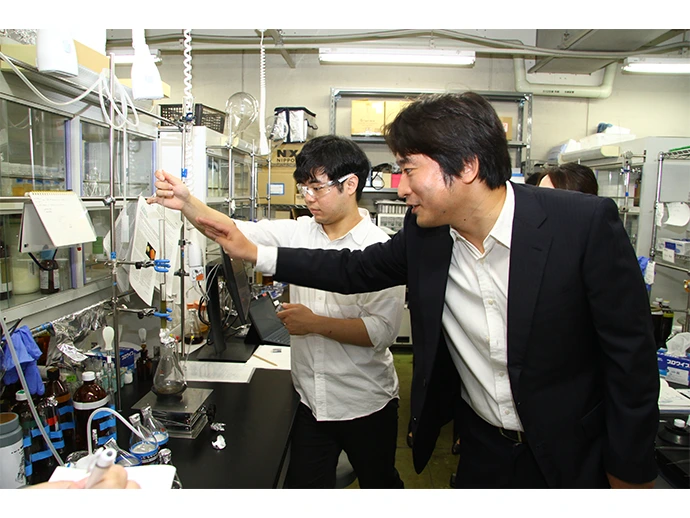
Daily research to discover seeds for new medicines from marine organisms
Related Link
中央大学 生物有機化学研究室