What is NYK?The World of Vessels

When you choose the dark mode display, you can reduce the power consumption and CO2 emissions generated by the website's screen display.
Released : Feb. 26, 2026
Updated : Feb. 26, 2026


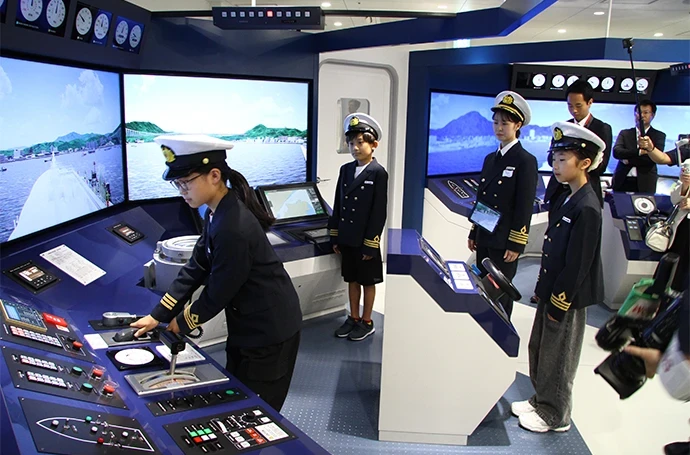
KidZania Fukuoka is an interactive indoor theme park where children under 15 can role-play a variety of jobs. One standout experience lets young visitors try their hand at being a navigation officer at a vessel training center pavilion sponsored by NYK Line. Featuring a realistic ship-handling simulator, the activity offers an engaging, hands-on experience where kids maneuver a vessel in a realistic setting while learning the importance of teamwork. This immersive experience is thoughtfully designed to spark interest in the navigation officer profession. But how realistic is this ship-handling simulator? We spoke with two active navigation officers to find out.
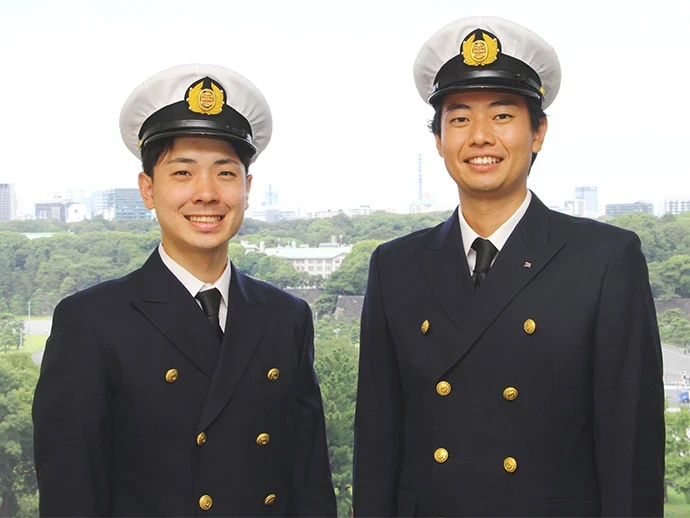
Tamon Takemata (left) Joined in 2018. Served on LNG (liquefied natural gas) carriers, container vessels, crude oil tankers, etc. Currently a second officer. Since July 2023, he has been working onshore as part of the Marine Group’s Coordination Team, sharing the appeal of the navigation officer profession through children’s events and guest lectures for elementary, junior high, and high school students. As a navigation officer, he oversaw pavilion development for KidZania Fukuoka’s vessel training center.
Ryotaro Irokawa (right) Joined in 2018. Served on LPG (liquefied petroleum gas) carriers, LNG carriers, container vessels, crude oil tankers, etc. Currently a second officer. Since December 2024, he has been working onshore in the Corporate Communication Group’s Media Relations Team, handling media events and press releases. After the completion of the vessel training center, he visited the site and experienced the simulator himself.
KidZania is a “city where kids take charge,” designed to let children learn about society while having fun. At KidZania Fukuoka’s vessel training center, children can experience maneuvering an LNG carrier. They learn about vessel types and roles, maritime traffic rules, and communication rules within the bridge, where vessel navigation is conducted. The simulator is operated by one team comprising three people.
Takemata: To ensure children could correctly understand the work of navigation officers, we worked closely with KidZania to build this pavilion. The entire experience lasts about 30 minutes, with about 15 minutes spent using the ship-handling simulator. During that time, we carefully considered, together with KidZania, how to present scenarios that could occur on an actual vessel while keeping the children engaged.
Irokawa: My first thought when I saw the simulator was, “This isn’t a toy for kids!” I was amazed by how precisely the bridge area was recreated. When you look closely, the ship’s wheel, engine telegraph, and compass are real equipment. Even instruments not directly related to the scenario have been recreated.
Takemata: We were particular about every detail, reviewing photos to confirm the bridge flooring, adjusting the types of switches on navigational instruments, and even matching the lighting colors of indicator lamps to real ones. There were moments when I found myself thinking, “That’s it! We’ve recreated it perfectly!” And when it comes to realism, children also communicate using authentic helm orders just like navigation officers do. “Port 10!”: Turn the rudder 10 degrees to port. “Starboard 10!”: Turn the rudder 10 degrees to starboard. “Midship”: Return the rudder to center. We conducted many rehearsals and fine-tuned adjustments to ensure the children could give helm orders at the correct times during the simulator scenario.
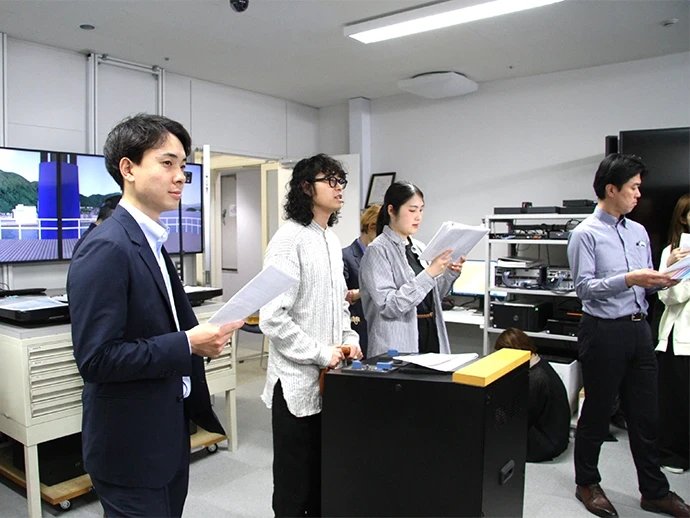
The ship-handling simulator specifications were carefully reviewed and refined in close coordination with KidZania and Japan Marine Science Inc., an NYK Group company.
Irokawa: Because this was for children, I expected a simplified, game-like experience. But it was completely different. When I tried the simulator, I realized it was filled with “navigation officer realities.” The scenario begins with departure, and before long, fishing vessels appear ahead, an extremely common sight! Fishing boats face different directions, and you never know which one will suddenly start moving. This is exactly the kind of hazard navigation officers must constantly watch for.
Takemata: The simulator scenario is set in Japan’s Kanmon Strait. In narrow waterways like this, small vessels such as fishing boats are especially important to monitor. I personally insisted on getting these details right.
Irokawa: Toward the end, there’s also a scene where you pass a large vessel. (The type is a secret!) It crosses your path at a slightly tricky angle. It’s a situation where you need communication like “We need to take evasive action,” or “Let’s contact the other vessel to confirm its course.” Including weather changes, I was impressed by how many “navigation officer realities” were packed into one scenario.
Takemata: In real vessel operations, onboard communication is extremely important. That’s why the vessel training center focuses heavily on teamwork. It reflects real-life navigation. The more you try it, the more enjoyable it becomes, and you will undoubtedly improve. I’m sure children will find the profession of a navigation officer appealing.
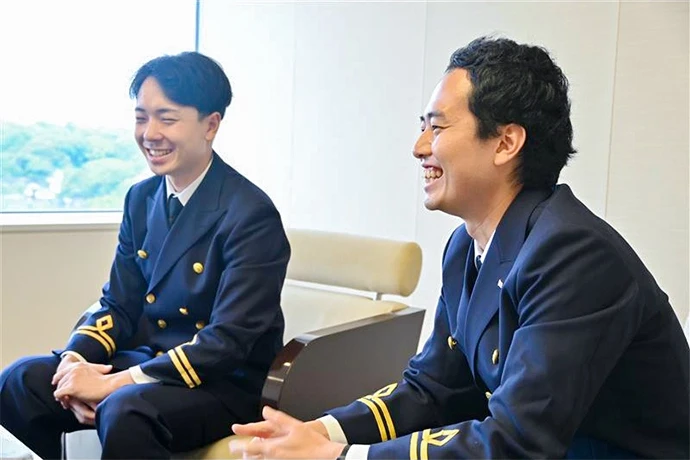
Packed with “navigation officer realities,” surprising even for the professionals
Takemata: We had the chance to hear feedback from children who tried the simulator. Their first reaction was, “The graphics are amazing!” Kids today are used to high-quality visuals from games, so I’m glad we used graphics similar to the simulators navigation officers use for actual training. We also made efforts to ensure that the children could steer the ship on their own and make it all the way to the goal. They even praised us, saying, “This isn’t just for kids!”
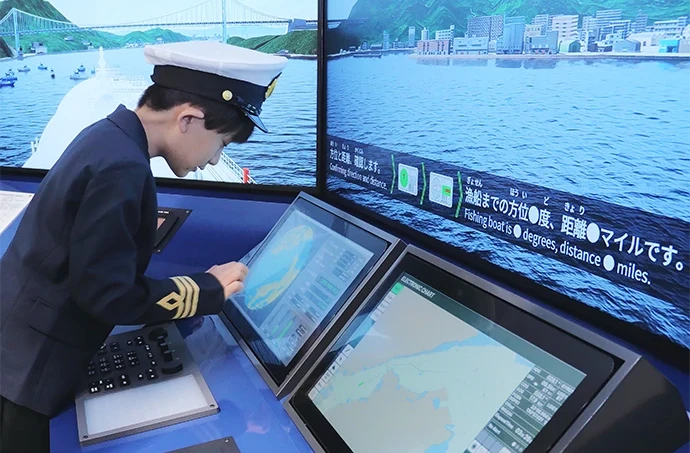
Uses the same graphics as real training simulators
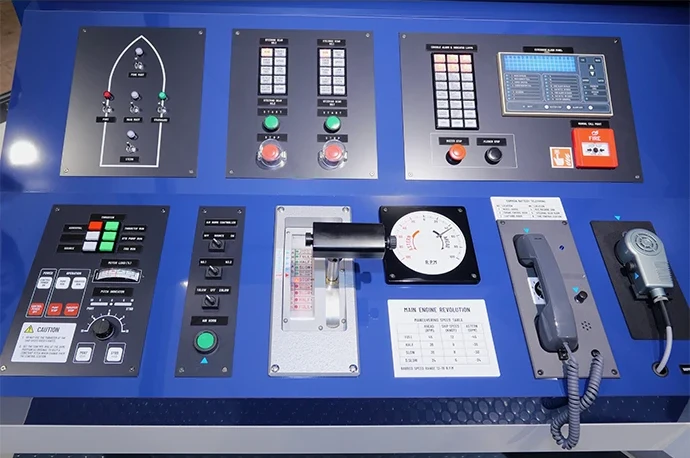
Realistic instruments impress even active navigation officers
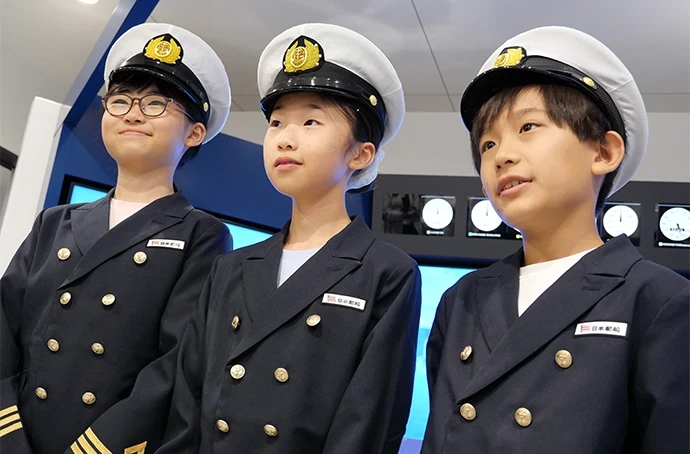
Uniforms worn during the experience are faithfully miniaturized (Ages 3–15, recommended 5–15)
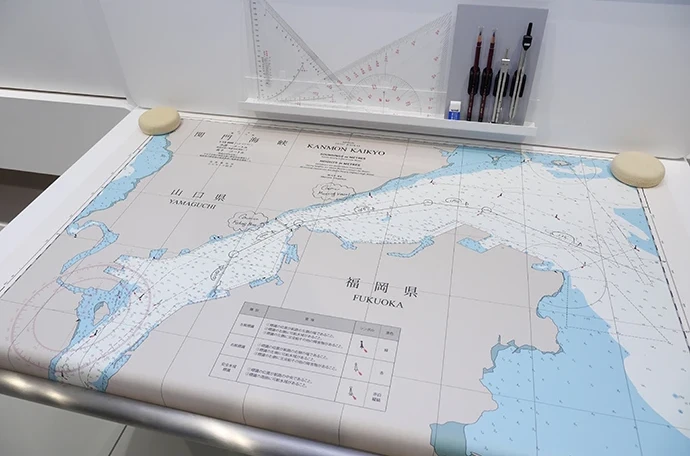
The nautical chart depicting the Kanmon Strait is of professional quality
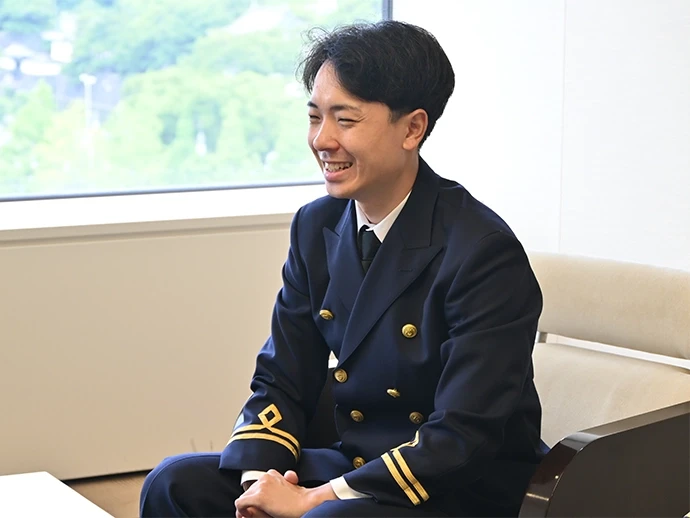
Every detail thoroughly refined (Takemata)
Irokawa: The appeal of being a navigation officer lies in communication. You cannot navigate a vessel alone. Safe voyages are created through communication with the engine room and the deck crew, and through teamwork with those who physically maneuver the ship. I hope children can experience a sense of achievement when three teammates work together to cross the Kanmon Strait and reach the open sea.
Takemata: There are many possible future paths, and I hope “seafarer” becomes one of the options kids consider. If children learn through the vessel training center that the navigation officer profession exists, and remember that excitement when choosing their future path, it would make me truly happy.
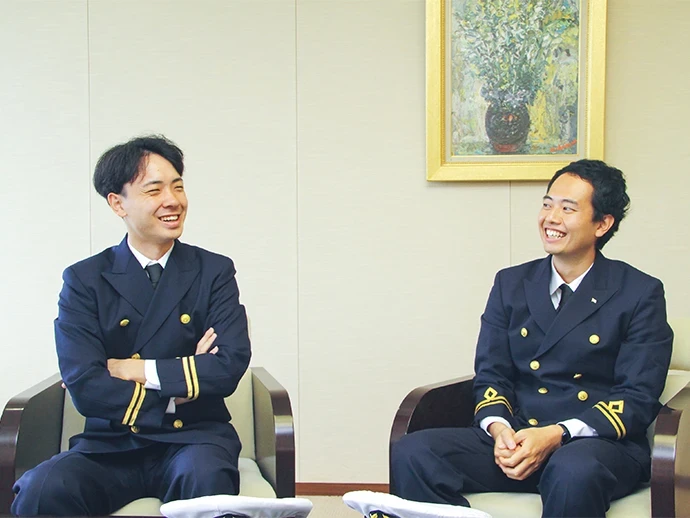
Two active navigation officers send encouragement to the children
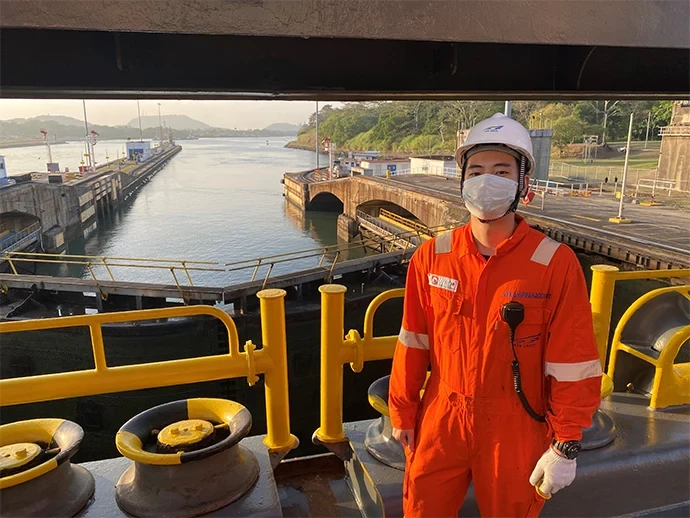
(Left) Irokawa transiting the Panama Canal
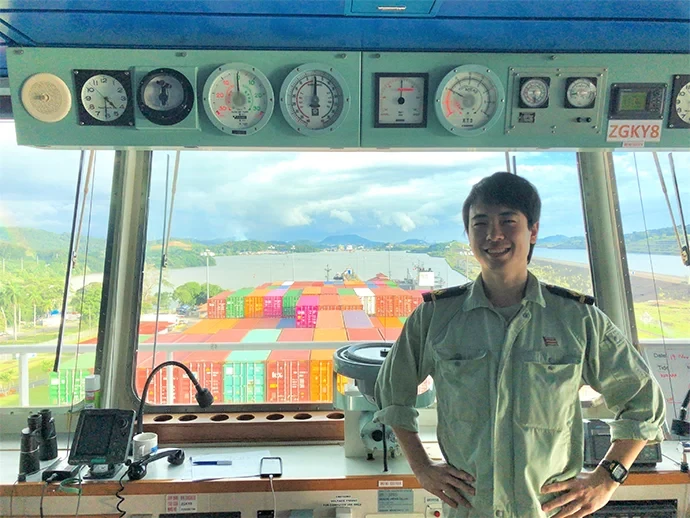
(Right) Takemata transiting the Panama Canal
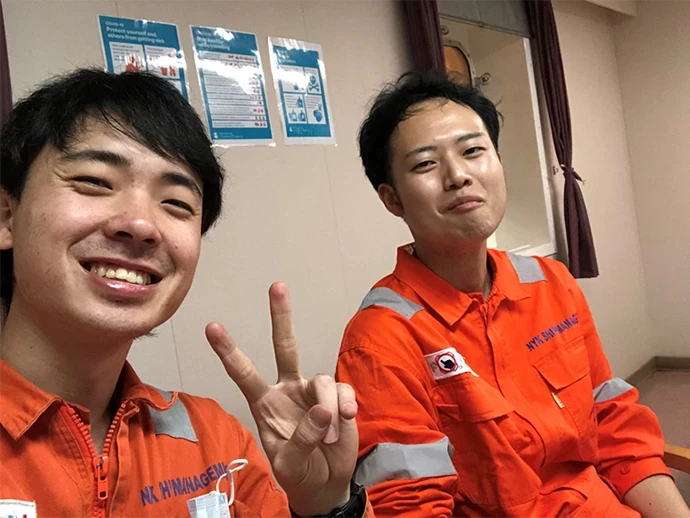
Aboard the container vessel NYK Daedalus — a photo taken when Irokawa boarded as Takemata’s successor
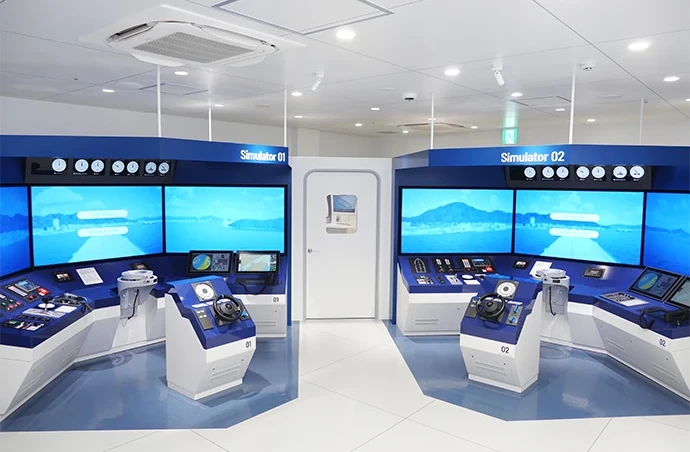
KidZania Fukuoka’s Vessel Training Center